There is a particular hush that arrives before rain in East Africa.
The air cools. Acacia leaves turn their pale undersides to the wind. Somewhere beyond the escarpment, thunder gathers with the patience of an old story. In the Serengeti, zebra stand motionless on the open plains. In the Maasai Mara, the light softens to silver. Dust, which has spent months rising behind vehicles and hooves, settles gently back into the earth.
Then the rain comes.
Not as an ending, but as a beginning.
Across Kenya and Tanzania, the green season is often misunderstood by first-time safari travelers. It is sometimes imagined as the “wrong” time to travel — a period to avoid in favor of the dry season, the river crossings, the easier sightings, the familiar safari calendar.
But for those who know East Africa more intimately, the green season reveals another kind of safari entirely.
Quieter. Slower. More atmospheric.
This is the season of luminous grasslands, dramatic skies, migratory birds, newborn wildlife, and camps that feel deeply private. It is the season when the landscape breathes again. When game drives unfold with more space and less urgency. When a guide can follow instinct, weather, tracks, and light rather than the movement of other vehicles.
For the traveler drawn not only to what is seen, but to how a place feels, the green season may be East Africa’s most refined safari secret.
What Is the Green Season in East Africa?
The green season generally refers to the wetter months across much of Kenya and Tanzania, often from around November to May, though exact conditions vary by region and year. In many areas, the short rains arrive around November and December, while the longer rains are more commonly associated with March, April, and May.
This does not usually mean rain all day, every day.
More often, safari days can still begin with clear morning light, followed by afternoon build-ups, passing showers, evening storms, and skies of extraordinary drama. Roads and access require thoughtful planning, especially in the wetter months, but with the right camps, guides, aircraft logistics, and regional choices, the green season can be deeply rewarding.
It is not a lesser safari.
It is a different safari.
A safari for travelers who understand that luxury is not always about more movement. Sometimes it is about fewer people. Better light. A slower rhythm. The ability to remain with a sighting without interruption.
The ability to feel that the landscape has opened itself quietly, almost privately, to you.
Why the Green Season Feels So Luxurious
Luxury on safari is often described through beautiful camps, private decks, fine linens, plunge pools, wine cellars, or seamless aviation.
All of these matter.
But the deepest luxury in East Africa is more elemental.
Time.
Silence.
Space.
A guide who does not need to hurry.
A landscape that is not crowded with expectation.
During peak safari months, particularly around celebrated migration moments, certain areas can become busy. The green season restores a different kind of intimacy. Camps often feel calmer. Private conservancies become even more compelling. Game drives have room to breathe. The landscape itself becomes part of the experience, not merely the backdrop.
In the Maasai Mara, the plains turn soft and vivid after rain. In Amboseli, clear post-rain skies can reveal Kilimanjaro with startling presence. In Tarangire, baobabs stand beneath vast clouds. In the Serengeti, the short-grass plains of the south become a nursery for one of nature’s great seasonal events.
For many experienced safari travelers, this is the appeal.
Not simply seeing more.
Feeling more.
A More Intimate Wildlife Experience
The dry season rewards concentration. Wildlife gathers around water. Sightings can be more predictable, more immediate, more obvious.
The green season rewards attention.
And attention changes the emotional texture of safari.
In the Southern Serengeti, the early months of the year bring the wildebeest calving season, when hundreds of thousands of calves are born across the plains between roughly January and March. Predator activity follows. Cheetah scan the open grass. Hyena call through the night. Lions move with quiet calculation through a landscape suddenly full of new life.
This is not the river-crossing drama many travelers associate with the Great Migration.
It is more primal. More intimate. Less performative.
Elsewhere, the bush takes on a different register. Elephants move through softened riverbeds. Giraffe appear against storm-dark skies. Leopards emerge between showers. Birdlife becomes exceptional as migratory species arrive and resident birds shift into breeding plumage.
For photographers, the green season can be extraordinary: saturated color, textured skies, reflected light, clean air, and landscapes that feel almost painterly.
Yet the real gift is subtler.
Guests begin to slow down.
Morning drives become less about chasing sightings and more about reading the land. Afternoons are shaped by weather, conversation, and stillness. A passing storm becomes part of the story. So does the smell of wet earth. So does the sound of rain moving across canvas while lanterns glow inside camp.
This is where safari stops feeling transactional.
And begins to feel personal.
The Return of Slow Safari
For years, many safari itineraries became increasingly compressed.
Three countries. Four camps. Too many flights. Too little time.
A constant pressure to see everything.
But a more discerning kind of traveler is beginning to move in the opposite direction.
Longer stays.
Fewer destinations.
Better guiding.
More privacy.
More depth.
The green season naturally supports this slower rhythm.
Because the landscape asks to be experienced, not conquered. Wildlife remains abundant, but the emotional center of the journey shifts. A three-night stay becomes five. A drive pauses because the light is beautiful. Lunch stretches into the afternoon while rain moves across the plains. A guide has time to explain tracks, grasses, bird calls, cloud formations, and the invisible intelligence of the ecosystem.
This is the essence of slow safari.
Not less safari.
Deeper safari.
At Altivago, we believe a journey through East Africa should not be measured by how much ground you cover, but by how deeply a place begins to live in your memory.
The green season is one of the finest expressions of that philosophy.
Why Experienced Safari Travelers Often Prefer the Green Season
The most seasoned travelers rarely speak only about sightings.
They remember atmosphere.
The storm that moved across the Ngorongoro Highlands while coffee steamed beside the fire.
The guide who followed leopard tracks through wet grass at dawn.
The evening when the entire camp seemed wrapped in the scent of rain and wild basil.
The hour spent with elephants and not another vehicle in sight.
This is why the green season appeals so strongly to return safari travelers, photographers, honeymooners, and those seeking a more private East African experience.
It offers a sense of access that is increasingly rare.
Not necessarily access in the formal sense — though availability at exceptional camps can be better outside peak months — but emotional access. Space to settle in. Space to observe. Space to let the journey become less about performance and more about presence.
For a first safari, the green season can be a beautiful choice when carefully designed.
For a second or third safari, it can feel like a revelation.
Where to Go for a Green Season Safari in Kenya and Tanzania
Not every region behaves the same way during the rains, which is why thoughtful planning matters.
The best green-season safari is not assembled from a standard route. It is shaped around rainfall patterns, wildlife movement, camp access, guiding quality, road conditions, photography goals, and the traveler’s appetite for privacy and atmosphere.
Southern Serengeti and Ndutu
From roughly January through March, the Southern Serengeti and Ndutu region become especially compelling during the wildebeest calving season. The plains are open, green, and alive with movement. This is one of Tanzania’s most powerful seasonal safari experiences, particularly for travelers interested in predator-prey dynamics, photography, and the quieter side of the Great Migration.
Maasai Mara Private Conservancies
In Kenya, private conservancies bordering the Maasai Mara can be wonderfully peaceful during quieter months. These areas often offer excellent guiding, controlled vehicle density, and a more flexible safari rhythm than busier reserve circuits.
For travelers who value privacy, conservation, and deeper interpretation, the conservancy model can be especially well suited to green-season travel.
Amboseli
After rain, Amboseli can be strikingly beautiful. The air clears. The marshes glow. Elephants move across open ground beneath the presence of Kilimanjaro. For photographers, the combination of wildlife, mountain light, and seasonal clarity can be remarkable.
Tarangire
Tarangire’s green season has its own quiet drama. The baobabs, riverine woodland, elephants, and open skies give the park a sculptural quality. While wildlife movement varies seasonally, the atmosphere can be deeply rewarding when paired with the right pacing and guiding.
Ruaha and Nyerere
For travelers seeking a wilder, less familiar Tanzania, Ruaha and Nyerere can offer a more remote green-season mood, though access and camp operations must be planned carefully. These are landscapes for travelers who appreciate scale, solitude, and a sense of frontier wilderness.
Zanzibar as a Soft Landing
A green-season safari can pair beautifully with the coast when timed with care. Zanzibar offers warm Indian Ocean air, slower days, textured skies, and a graceful transition from the intensity of the bush to the softness of the sea.
For honeymooners especially, this combination can feel deeply restorative.
Is the Green Season Right for Every Traveler?
Not always.
The green season is best suited to travelers who value atmosphere as much as predictability. It asks for a slightly more flexible spirit. Some roads may be slower. Some regions may be less accessible. Some sightings may require more patience.
But for the right traveler, these are not compromises.
They are part of the texture.
A green-season safari is ideal for those who appreciate privacy, photography, birdlife, conservation, excellent guiding, and a more contemplative pace. It is also beautifully suited to honeymooners, return safari guests, writers, artists, families seeking quieter camps, and travelers who prefer not to follow the most crowded seasonal path.
It is less suited to those who want guaranteed dry conditions, maximum visibility at all times, or a fast-paced checklist itinerary.
That distinction matters.
Because the best safari is not the one that follows the loudest season.
It is the one that matches your rhythm.
The Luxury of Space
There is a tendency in modern travel to confuse luxury with accumulation.
More destinations.
More activity.
More movement.
More proof.
But East Africa teaches another lesson.
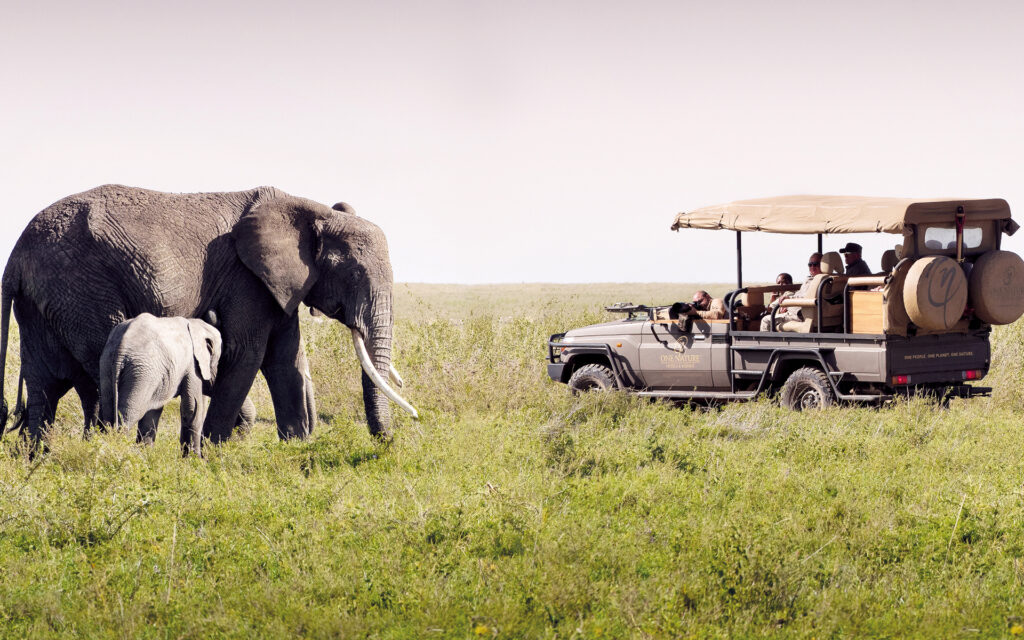
Sometimes luxury is remaining beside elephants for an hour because no one is waiting behind you.
Sometimes it is waking to the smell of rain on warm earth.
Sometimes it is watching storm light move across the Serengeti while your guide says nothing, because nothing needs to be said.
Sometimes it is staying long enough in one landscape for its patterns to become familiar.
The green season invites precisely this kind of travel.
Slower. More private. More reflective.
And often, far more memorable.
At Altivago, we design safaris around season, pace, guiding, privacy, and personal rhythm — not simply around a map. For travelers willing to look beyond the obvious safari calendar, the green season offers one of East Africa’s most quietly luxurious experiences.
It may be the season fewer people understand.
It may also be the one you remember most clearly.
Begin Your Journey
Whether you are planning a first safari or returning to East Africa with a deeper sense of curiosity, the green season offers a more intimate way to experience Kenya and Tanzania.
A private journey can be shaped around calving season in the Serengeti, quiet conservancy days in Kenya, slow evenings under canvas, or a restorative ending on the shores of Zanzibar.
To begin shaping an unhurried East African safari around season, pace, and personal rhythm, we invite you to start the conversation.
FAQs
Is the green season a good time for safari in East Africa?
Yes. For the right traveler, the green season can be one of the most rewarding times for safari in Kenya and Tanzania. It offers greener landscapes, fewer vehicles, dramatic skies, excellent birdlife, and a slower, more private rhythm.
When is the green season in Kenya and Tanzania?
The green season generally falls between November and May, though conditions vary by region. November and December are often associated with short rains, while March to May can bring longer rains in many areas.
Does it rain all day during the green season?
Not usually. Rain often arrives in afternoon or evening showers, with many mornings still suitable for game drives. However, rainfall varies by region and year, so careful planning is important.
Where is best for a green season safari in Tanzania?
Southern Serengeti and Ndutu are especially compelling from January to March during the wildebeest calving season. Tarangire, Ruaha, and Nyerere can also be rewarding depending on timing, access, and camp choice.
Is the green season good for photography?
Yes. Many photographers love the green season for its dramatic skies, clean air, rich color, reflective light, and fewer vehicles at sightings.