Maasai Mara Reserve or Private Conservancy? 7 Essential Decisions for a Private Migration Safari
The most important choice in a Maasai Mara Reserve vs private conservancy safari is often made before the first game drive.
Not what you hope to see.
Where you choose to wait.
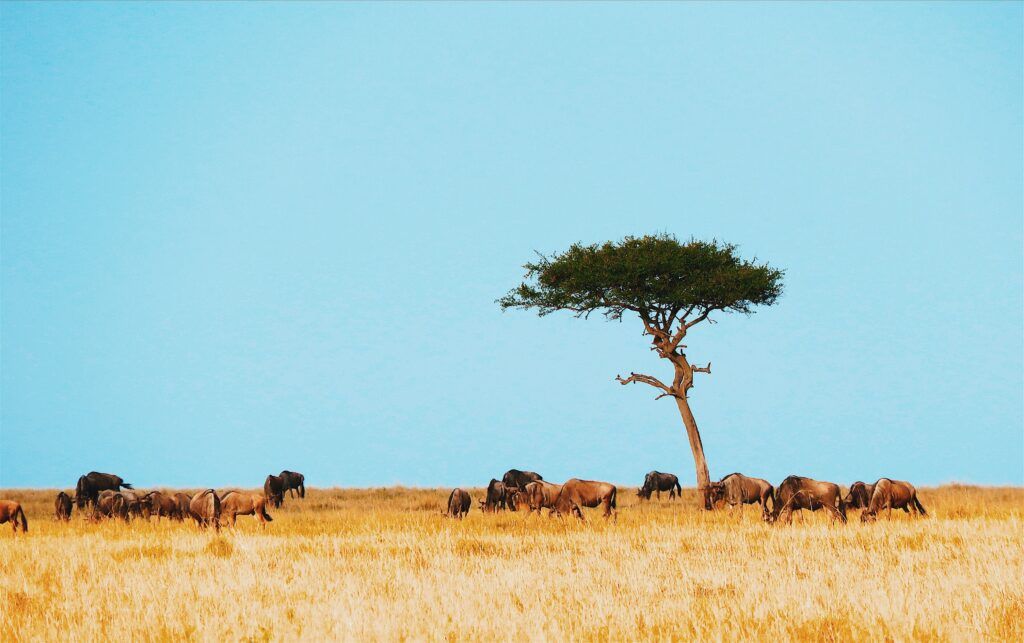
During the Great Migration, the Mara can feel vast, elemental and alive with movement: wildebeest gathering in restless numbers, zebra crossing pale grass, lion prides watching from shade, vultures turning in high circles, dust rising softly behind a moving herd.
It can also feel busier than many private travellers expect.
The Migration is extraordinary, but it is not automatically private. During peak weeks, certain river crossing points and predator sightings can attract concentrated vehicle pressure. A less considered safari can become reactive: following radio calls, arriving late to crowded sightings, waiting among too many vehicles and leaving before the moment has properly unfolded.
For Altivago, the question is not simply whether to visit the Maasai Mara during migration season. It is how to design the safari so the Mara still feels spacious, intelligent and personal.
That comes down to seven decisions.
1. Choose Your Base: Reserve, Mara Triangle or Private Conservancy
The Maasai Mara is often spoken of as one destination, but the experience changes significantly depending on where you stay.
The Maasai Mara National Reserve is the classic heart of the Kenyan migration story. It offers direct access to open plains, river systems, predator territories and many of the landscapes travellers associate with the Great Migration. For first-time safari guests, it can deliver the emotional scale they have imagined for years.
The Mara Triangle is the western section of the Reserve, bordered by the Mara River, the Oloololo Escarpment and the Serengeti. It deserves more attention than it often receives. For private travellers, the Triangle can offer a more composed Reserve experience when planned well: strong scenery, important river access, escarpment views and a western-Mara atmosphere that feels distinct from the busier central areas.
The private and community conservancies sit around the Reserve, especially to the north and east. Mara North, Naboisho, Olare Motorogi, Ol Kinyei and Olderkesi are among the names that often appear in thoughtful safari planning. These areas are not fenced away from the wider ecosystem. Wildlife moves naturally across them. What changes is the style of access: fewer beds in many areas, lower vehicle density, a quieter guiding rhythm and, in some conservancies, activities such as night drives and guided walks where available and suitable.
The decision is not about choosing the “best” area in a generic sense.
It is about choosing the base that matches the journey.
For many Altivago guests, the strongest migration safari is not purely Reserve-based or purely conservancy-based. It is a private conservancy stay with carefully timed access into the Reserve or Mara Triangle when wildlife movement, light and guest energy align.
That balance gives travellers proximity to the Migration without being governed by it.
2. Decide How Much Crowd Exposure You Are Willing to Accept
Crowd management is one of the most important luxury decisions in the Mara.
This does not mean avoiding other vehicles entirely. During migration season, that would be unrealistic in certain areas. It means designing the safari so vehicle pressure does not define the experience.
Inside the Reserve, especially near famous crossing points or high-profile predator sightings, the atmosphere can become concentrated during peak weeks. For some travellers, this is acceptable because the priority is direct access to classic migration areas. For others, especially honeymooners, families, photographers and guests seeking privacy, too much vehicle clustering can weaken the feeling of wilderness.
A private conservancy can reduce this pressure. So can the Mara Triangle, depending on timing, camp position and guiding. So can a private vehicle, a senior guide and the willingness to leave a crowded sighting for a quieter one.
This is where Altivago’s slow safari philosophy matters.
The finest Mara moments are not always the most famous ones. A lioness moving through low grass before sunrise. A cheetah pausing on a termite mound with no other vehicle in sight. Elephants crossing a quiet valley in evening light. A guide switching off the engine because the plains are beginning to speak.
Luxury here is not only access.
It is discernment.
3. Match the Conservancy to Your Style of Travel
Not all conservancies feel the same. Choosing between them is about atmosphere, camp style, guiding culture, access, guest profile and how the conservancy fits into the wider itinerary.
Mara North: best for space, scale and a broad private-Mara feeling
Mara North is usually the choice for travellers who want scale, strong wildlife and a more expansive sense of wilderness. It suits guests who value privacy and open country without feeling detached from the wider Mara ecosystem.
Naboisho: best for families and guiding depth
Naboisho is often excellent for families, curious first-time safari travellers and guests who value strong guiding, resident wildlife and a softer camp rhythm. It can feel immersive without being overly intense, making it a strong choice for travellers who want substance as much as spectacle.
Olare Motorogi: best for honeymooners, photographers and predator country
Olare Motorogi often appeals to honeymooners, photographers and guests seeking intimacy, refined camp settings and serious wildlife depth. For travellers who want privacy without losing the sense of being in a highly active wildlife area, it can be especially compelling.
Ol Kinyei: best for quieter, understated safari
Ol Kinyei is well suited to guests drawn to a lower-density safari atmosphere. Smaller camp styles, walking where appropriate, birdlife and a gentler sense of place can make it rewarding for travellers who do not need the most famous address.
Olderkesi and quieter conservancy areas: best for remoteness and conservation-linked travel
Olderkesi and other quieter conservancy areas can suit travellers interested in remoteness, community-linked conservation and less conventional routing. These areas require careful matching between guest expectation, camp style and guiding strength. For the right traveller, they can feel deeply personal.
The important point is not to choose the conservancy with the strongest name recognition.
It is to choose the one whose rhythm matches the traveller.
A honeymoon couple, a multigenerational family, a photographer and a returning safari guest may all belong in different parts of the Mara.
4. Secure a Private Vehicle and the Right Guide
During migration season, a private vehicle is not a decorative upgrade.
It changes the safari.
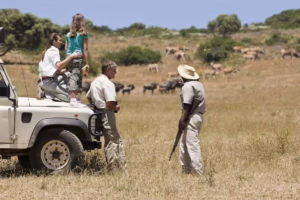
A private vehicle allows a family to return when children tire, a photographer to wait for light, a honeymoon couple to protect privacy and older travellers to move at a gentler pace. It gives the day elasticity. It allows the safari to follow the guest rather than the compromise of a shared vehicle.
The guide matters just as much.
A strong migration guide does not simply know where animals were seen that morning. They understand pressure, wind, light, road conditions, guest energy and animal behaviour. They know when to approach, when to hold back, when not to chase a radio call and when to wait because something is beginning to unfold.
This is the difference between seeing wildlife and understanding the landscape.
For private travellers, the guide is also a quiet interpreter of comfort. They notice when children are losing attention, when a guest needs a slower morning, when a sighting is becoming too crowded, when a picnic should be moved, when silence is better than explanation.
The best migration safari is not the one that reaches a sighting first.
It is the one that knows what to do once it arrives.
5. Stay Long Enough for Flexibility
A two-night Mara stay can sound efficient.
In migration season, it is often too compressed.
The Mara rewards time. Weather changes. Herds move. Crossings cannot be ordered. Children need rest. Photographers need light. Private travellers need enough space in the itinerary for the safari to feel calm rather than over-managed.
Altivago generally prefers four to five nights in the Mara ecosystem during migration season, especially for guests seeking privacy, excellent guiding and a slower rhythm.
This does not mean every day must be full. A longer stay creates room for contrast: an early departure into the Reserve, a quieter morning in the conservancy, a slow lunch at camp, a guided walk where appropriate, an unhurried evening drive, or simply time to sit and watch the light move across the plains.
A longer stay does not simply increase the chance of sightings.
It improves the quality of attention.
When travellers know they have enough time, they stop trying to consume the Mara. They begin to notice it.
That is often when the safari becomes most powerful.
6. Plan Reserve Access, Not Just the Camp
One of the most common mistakes in Mara planning is choosing a beautiful camp without thinking carefully about how each day will actually work.
Where is the nearest airstrip? How long is the transfer to camp? How far is the Reserve gate? How realistic is a full day in the Mara Triangle? Will the family enjoy a long day out, or would two shorter drives be better? Is the guide able to adapt the plan if the herds move? Is the camp location elegant in practice, not just on a map?
These questions shape the lived experience of the safari.
A conservancy base can be exceptional, but Reserve access should be planned with care. Some guests may want one full day inside the Reserve or Mara Triangle, with a considered picnic and a guide who knows when to enter and when to return. Others may prefer to remain mostly in the conservancy, using the Reserve only if wildlife movement strongly supports it.
A Reserve or Triangle stay also needs careful handling. Camp position, road access, sighting pressure and transfer flow all matter. A camp can be beautifully styled and still be wrong for a particular traveller if the daily movement feels tiring or exposed.
The best safari design does not simply ask, “Where should we stay?”
It asks, “How will the day feel from beginning to end?”
7. Design the Routing Around Comfort, Airstrips and Onward Flow
At the highest level, logistics are not separate from luxury.
They are part of it.
For high-net-worth travellers, a Mara safari should be planned around privacy, access and ease of movement.
That includes the right airstrip, sensible luggage handling, manageable transfer times, private vehicle arrangements, camp layout, dietary confidence, medical awareness, family configuration and onward routing.
For private aviation guests, the question is not simply whether private aviation is possible. It is whether it improves the journey. Air access should simplify the safari, not turn it into a performance of complexity.
For multigenerational families, the routing must protect energy. Interconnecting tents, family suites, exclusive-use houses, pool access, early dinners, flexible wake-up times and shorter transfers may matter as much as the wildlife.
For honeymooners, the design should protect privacy and atmosphere. The wrong camp can feel too exposed. The right one can make the Mara feel as if it has opened through a quieter door.
For photographers, routing affects light. A poorly positioned camp can cost the best hours of the day. A well-positioned camp, paired with a private guide, creates time to wait for behaviour rather than chase movement.
For guests with reduced mobility, sensory sensitivities or specific dietary needs, pre-arrival clarity matters. A refined safari should feel held before it begins.
This is where private planning becomes visible in its invisibility.
Nothing feels forced. Nothing feels improvised. The journey simply moves well.
Altivago’s View
For a first migration safari, Altivago usually favours a private conservancy base with selective access into the Maasai Mara National Reserve or Mara Triangle, supported by a private vehicle and excellent guiding.
This approach gives travellers access to the Migration without making the entire journey depend on it. It protects privacy, allows flexible pacing and creates room for the Mara beyond the famous moments.
A Reserve-based stay may still be right for travellers focused on classic migration landscapes and river systems. The Mara Triangle can be especially compelling for guests who want Reserve access with western-Mara scenery, escarpment drama and a more composed setting when planned well.
But for many private travellers, a conservancy-led safari creates the more complete emotional experience.
The luxury is not distance from the Migration.
It is distance from the rush.
Three Refined Ways to Structure a Private Mara Migration Safari
1. Conservancy-led, with selective Reserve access
This is often the most balanced Altivago approach.
Stay four or five nights in a carefully chosen private conservancy, with a private vehicle and strong guide. Use one carefully timed day, or two if conditions support it, to enter the Reserve or Mara Triangle for classic migration landscapes.
This works beautifully for honeymooners, families, returning safari travellers and guests who want the Migration without spending every day in the busiest areas.
2. Mara Triangle and conservancy split
For travellers who want both direct migration access and a quieter finish, a split stay can be elegant.
Begin with two nights in or near the Mara Triangle, focusing on river systems, western scenery and classic migration movement. Then continue to a private conservancy for three nights of slower guiding, lower vehicle density and a more intimate camp rhythm.
This structure works well when travellers have enough time and want the safari to move from scale into stillness.
3. Family or private aviation flow
For multigenerational families or private aviation guests, the sequence should be shaped around comfort first.
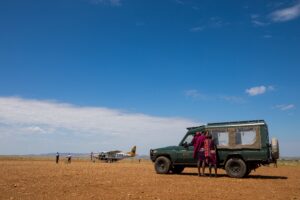
Arrive in Nairobi and overnight quietly before flying into the Mara. Choose the airstrip according to the camp, not generic convenience. Prioritise private vehicle use, short transfer times where possible, camp layout, flexible meals, pool or downtime access and clear onward routing.
This style of safari should feel smooth from the first arrival to the final departure. The wildlife may be wild. The logistics should not be.
What Can Go Wrong When the Mara Is Poorly Planned
The Maasai Mara is one of Africa’s great wildlife landscapes, but even a remarkable destination can feel ordinary when the planning is careless.
A rushed migration safari can mean too few nights, crowded sightings, long transfers, poorly positioned camps, shared vehicles when privacy is needed, children becoming tired, photographers missing the best light, honeymooners losing the sense of seclusion, or an expensive journey that feels strangely generic.
None of these problems is inevitable.
They are usually design problems.
The right safari protects time, privacy, comfort and possibility. It gives the guide room to make good decisions. It gives guests enough space to rest. It allows the day to change when the wildlife changes.
This is where a private, carefully handled Mara safari becomes very different from a standard migration itinerary.
Best Time to Stay in the Maasai Mara for the Migration
The Kenyan chapter of the Great Migration is usually associated with July to October, though the exact rhythm changes each year. Rainfall, grazing quality and herd behaviour all influence movement, so a migration safari should be planned with flexibility rather than fixed promises.
July: early movement and anticipation
July often carries the first strong sense of migration energy as herds move through the northern Serengeti and toward the Mara ecosystem. It can suit travellers who value anticipation, space and flexibility, though timing varies year by year.
August: peak demand and the strongest need for private planning
August can bring intense migration interest and high traveller demand. For private guests, this is the month when camp choice, guide quality, vehicle privacy and crowd management become especially important.
September: strong balance of movement and atmosphere
September is often one of the most rewarding months for travellers who want migration energy with a slightly more settled feel. It can offer a compelling balance between wildlife movement, light, atmosphere and thoughtful camp selection.
October: later-season character and predator interest
October can still be excellent, especially for predator viewing and late-season atmosphere, though herd distribution may begin to shift. It can suit travellers who are less fixed on river-crossing drama and more interested in the wider Mara ecosystem.
The best month is not only a wildlife question.
It is a privacy question, a camp-availability question, a family-calendar question and a comfort question.
The right timing depends on the journey you are actually trying to have.
Final Thought: Choose the Mara You Can Actually Feel
The Great Migration is not a single event. It is a living movement across grass, rain, hunger, instinct and time.
To experience it well, the traveller needs more than a famous camp and a hopeful date. They need the right base, the right guide, the right pace and enough space for the Mara to reveal itself without being forced.
The Reserve gives access to scale.
The Mara Triangle adds western drama, river country and a more composed Reserve experience when handled well.
The conservancies give access to stillness.
The finest journeys often understand the value of all three.
For Altivago, the question is never simply where to stay during the Great Migration. It is how the stay should feel when the engine is off, when the herds have moved beyond view, when the evening cools and when the guest realises that the most powerful safari moments are not always the loudest ones.
They are the ones given time.
Altivago shapes migration-season journeys by deciding whether your safari belongs inside the Maasai Mara National Reserve, in the Mara Triangle, in a private conservancy, or in a carefully paced combination of all three.
Each private Mara safari is designed around conservancy access, Reserve timing, guide quality, airstrip flow, camp atmosphere and the level of privacy each guest requires.
The right Mara journey is not the busiest route through the ecosystem.
It is the one that gives you enough space to truly arrive.