Kenya or Tanzania for a Family Safari? A Private Guide Across Generations
The first light has not yet reached the grass.
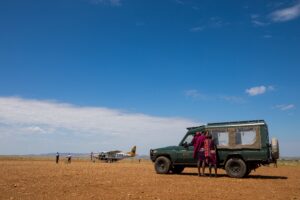
One child is awake, listening to movement beyond the canvas. A grandparent waits with coffee beneath a blanket. Someone else would prefer another hour of sleep. The guide is ready, but the vehicle will leave when the family is ready.
This is where a private family safari begins.
Not with the longest destination list, but with a route that can hold several generations without asking them to wake, eat, move, and pay attention in precisely the same way.
The first planning question is often about Kenya or Tanzania.
The answer should be clear enough to help, but careful enough to trust.
Is Kenya or Tanzania better for a family safari?
Kenya often suits families who prioritise flexible days, private-use houses, varied activities and a conservancy-led safari.
Tanzania often suits families who want the Serengeti to lead the journey and are willing to spend longer in fewer, larger landscapes.
For families with children under ten, three generations, or markedly different energy levels, a carefully designed Kenya itinerary may be easier to adapt to. Laikipia and selected Mara settings offer particularly strong possibilities for private houses, dedicated guiding and days that extend beyond conventional game drives.
For older children and teenagers interested in wildlife behaviour, photography or migration ecology, Tanzania can be especially compelling. The strongest version is rarely a rapid northern circuit. It is a Serengeti-led journey with enough time to understand the landscape.
These are broad itinerary patterns, not fixed country rules. A camp’s room design, child policy, guide allocation and transfer flow can matter more than the country itself.
Kenya or Tanzania with children: the comparison
| Planning question | Kenya | Tanzania |
|---|---|---|
| Often strongest for | Younger children, multigenerational groups and private-house stays | Older children, teenagers and wildlife-focused families |
| Typical rhythm | Varied and adaptable | Expansive and immersive |
| Private-use accommodation | Particularly strong in Laikipia and selected conservancy settings | Available in several regions, but precise layout and location require comparison |
| Activity mix | Game drives plus selected walking, riding, tracking and conservation experiences | Exceptional game viewing, with walking, boating or night activities in selected parks and concessions |
| Migration planning | The northern chapter within the Mara ecosystem | Several seasonal chapters across the Serengeti |
| Routing | Often works well as a fly-in journey between contrasting regions | Road-and-air combinations can work well, but distances reward restraint |
| Coast pairing | Lamu, Diani, Watamu and the wider Kenyan coast | Zanzibar and the Tanzanian coast |
| Main planning risk | Adding too many contrasting regions | Compressing the northern circuit |
| Altivago view | Choose Kenya when flexibility leads the brief | Choose Tanzania when wildlife immersion leads the brief |
Which country suits your family profile?
Families with children under ten
Younger children often benefit from shorter drives, flexible meals, open space and more than one way to experience the landscape.
In many classic family itineraries, Kenya offers a particularly useful combination of private houses, conservancy stays and varied activities. The advantage is property-specific: some camps accept young children but remain poorly suited to them because of exposed layouts, external room connections or rigid shared schedules.
The right question is not simply whether a camp welcomes children.
It is whether the camp understands how that particular family travels.
Families with teenagers
Teenagers rarely need a safari to be simplified. They are more likely to engage when the experience has substance.
Wildlife photography, animal behaviour, tracks, conservation technology, astronomy and sustained time with an excellent guide can give the journey intellectual depth. A well-positioned Serengeti camp can be especially rewarding when the family remains for four or five nights rather than treating the park as one brief stop on a circuit.
Kenya may be stronger for teenagers who prefer greater activity variety. Tanzania may be stronger when wildlife observation itself is the central interest.
Three generations travelling together
For a multigenerational safari, the room plan and daily logistics usually matter more than the national comparison.
The itinerary must account for walking distances, vehicle access, sleep patterns, meal times and different tolerances for flights or long drives. A private house can be valuable, but only when the bedrooms, common areas and pathways suit the group.
Travelling together should not mean surrendering individual rhythm.
When Kenya is the stronger family choice
Kenya works particularly well when the family wants contrast without crossing an international border.
A considered route might combine Nairobi, Laikipia and the Maasai Mara. The landscapes feel distinct, yet the journey can remain coherent when each region is given enough time.
Laikipia: space, participation and private houses
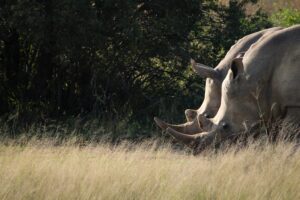
Laikipia can offer rhino conservation, rare northern species, private ranches, community-linked conservancies and activities beyond the vehicle.
Depending on the property and the ages involved, the family might combine game drives with tracking, walking, riding or time with conservation teams. These should be selected for substance, not added simply to keep children occupied.
Laikipia’s private houses are especially useful for larger families. Shared living space, flexible meals, dedicated guiding and quieter afternoons can allow grandparents, parents and children to remain connected without following one continuous lodge programme.
The value is not merely exclusivity. It is ease.
The Maasai Mara: choose the setting, not only the name
The Maasai Mara National Reserve, Mara Triangle and surrounding conservancies offer different patterns of access, vehicle density and permitted activities.
For a family prioritising privacy, a conservancy-led stay may provide a more adaptable rhythm. The precise experience still depends on the conservancy, camp position, season and guide. Walking, night drives and off-road access should never be assumed from the word “conservancy” alone.
During migration months, a private vehicle becomes particularly valuable. It allows the family to decide how long to remain at a sighting, when to return to camp and whether to leave a busy area for quieter ground.
Kenya may suit your family when:
- younger children need a more varied day;
- a private house is central to the brief;
- grandparents and children move at different speeds;
- private conservancy access matters;
- conservation or specialist activities are important;
- the Kenyan coast is the preferred ending.
Kenya is not automatically the easier option. A route attempting to include Laikipia, Samburu, Amboseli and the Mara in one short journey can be as tiring as any hurried circuit.
Its advantage appears only when the itinerary is edited.
When Tanzania is the stronger family choice
A Serengeti-led Tanzania safari often rewards families prepared to stay longer in fewer places.
The Serengeti is not one uniform destination. Its southern plains, central valleys, western areas and northern river country change with rainfall, grazing and seasonal wildlife movement. Choosing the correct region matters more than adding several Serengeti camps simply to cover ground.
Tarangire: a measured opening chapter
Tarangire can create a gentle beginning to a northern Tanzania family safari.
The landscape introduces baobabs, elephants and the relationship between wildlife and water. It can be reached by road from Arusha, allowing the family to settle into the journey before flying deeper into the safari circuit.
A refined route might travel by road from Arusha to Tarangire, then continue by light aircraft into the Serengeti. The family can fly onward to Arusha or Zanzibar rather than retracing the entire circuit by road.
Exact flight connections and airstrip combinations should be checked for the travel date.
The Serengeti: depth rather than coverage
For teenagers, photographers or families deeply interested in animal behaviour, four or five nights in the correct Serengeti region can be more rewarding than a longer list of brief stops.
A mobile or seasonal camp may place the family closer to a particular migration phase. A permanent camp may offer more established facilities, easier room planning and greater predictability. Neither model is inherently better for families.
The questions are practical:
- Are the rooms genuinely suitable for the children’s ages?
- How long is the airstrip transfer?
- Is a private vehicle available?
- Can the daily schedule be adjusted?
- Does the camp’s seasonal position suit the wildlife priority?
- Will the family value remoteness, or find it restrictive?
Do not add Ngorongoro automatically
Ngorongoro can bring extraordinary scenery and concentrated wildlife viewing, but it should earn its place in the route.
Adding it may introduce another hotel change, more road time and an early departure. For some families, this contrast is worthwhile. For others, those nights are better used in Tarangire or the Serengeti.
A familiar circuit is not always the most considered itinerary.
Tanzania may suit your family when:
- The Serengeti is the principal reason for travelling;
- The children can enjoy longer periods of observation;
- migration ecology or photography is a serious interest;
- The family is comfortable with four or five nights in one region;
- Zanzibar is the preferred final chapter;
- Landscape continuity matters more than activity variety.
Family suite or private safari house?
“Family-friendly” is too broad to guide a serious booking decision.
A family suite may consist of internally connected bedrooms. At another camp, the rooms may be separate tents joined by an external deck. A private house may have generous common areas but place bedrooms on different levels or far apart.
The answer lies in the floor plan, not the adjective.
| Consideration | Family suite | Private house |
|---|---|---|
| Often suits | One household or a smaller family | Three generations, several siblings or larger private groups |
| Privacy | Private bedrooms within a shared camp | Greater control over living, dining and guest flow |
| Meals | Usually flexible within the camp’s service style | Often easier to arrange around the family |
| Guiding | May still require a private-vehicle supplement | Dedicated guiding is more commonly part of the design, but must be confirmed |
| Best reason to choose it | Safe, practical room connection | Shared space without a fixed communal rhythm |
| Main point to verify | Whether rooms connect internally | Bedroom distance, levels and access to common areas |
Before confirming either option, check:
- whether bedrooms connect internally;
- whether children can move safely between sleeping areas;
- the distance to the main camp;
- whether nighttime escorts are required;
- steps, slopes and pathway surfaces;
- private-dining arrangements;
- pool position and supervision;
- vehicle access to the accommodation;
- bathroom suitability for mobility needs.
The most elaborate property is not always the most luxurious choice. The right accommodation is the one that removes the most friction.
Why a private vehicle matters
For most family safaris, a private vehicle is worth prioritising.
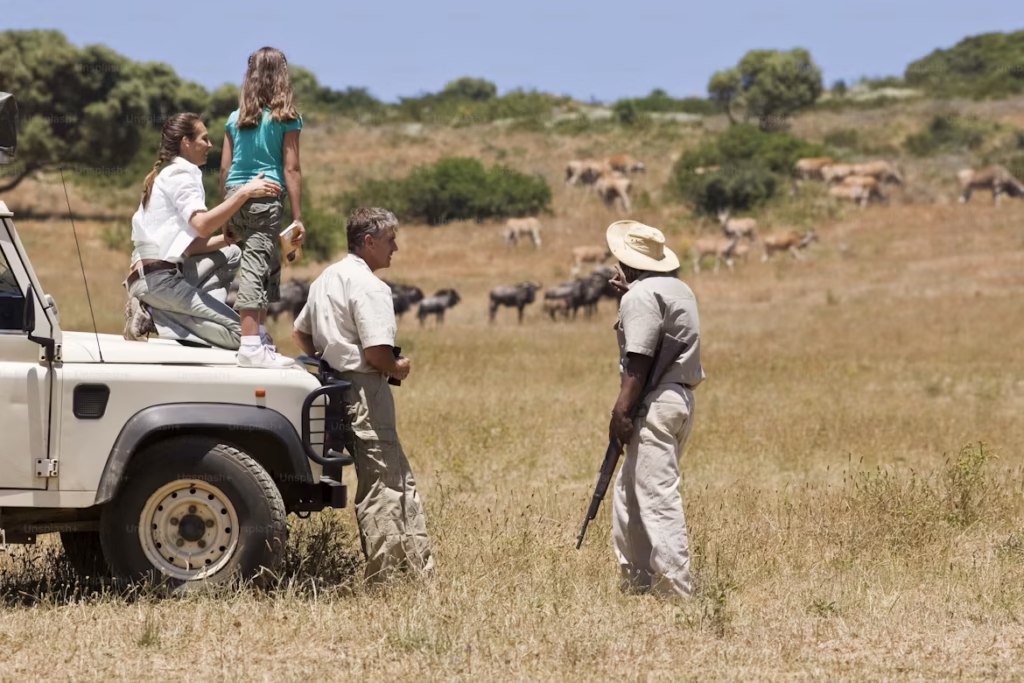
It allows a child to ask questions without pressure, a photographer to wait for the light, and a grandparent to choose a shorter morning. The family can stop for tracks, birds or a landscape rather than conforming to the interests of unrelated guests.
The deeper luxury is control over time.
Before booking, confirm:
- whether the vehicle is private for every drive;
- whether the guide is also dedicated to the family;
- whether the arrangement lasts for the full stay;
- how many window positions the vehicle offers;
- whether child seating or a portable step can be provided;
- how flexible departure and return times can be.
A private vehicle and a private guide are not always described in the same way. The distinction should be clear before the itinerary is confirmed.
When should a family travel?
There is no single best month across Kenya and Tanzania. The right season depends on the school calendar, wildlife priority, preferred atmosphere and tolerance for peak demand.
January to March
This is a strong period for families interested in the southern Serengeti and its wider short-grass plains, where the calving-season landscape becomes the central wildlife story.
The experience is about more than newborn animals. It is an opportunity to understand migration ecology, predator movement and the relationship between rain and grazing.
For families less interested in river-crossing season, it can be a richer and more coherent reason to choose Tanzania.
April and May
The long-rain period can bring green landscapes, dramatic light and quieter camps. It also makes access and property choice more important.
Some camps reduce operations or close seasonally. Road conditions and transfer times can vary. The correct question is not whether East Africa is suitable as a whole, but which precise camp, airstrip and landscape will work for the family.
June
June can offer an appealing transition into drier safari conditions before the height of the northern summer holidays.
Mornings may be cool, vegetation begins to change and selected regions can feel calmer than in the peak migration months. It is especially useful for families with some freedom outside the main school calendar.
July to October
These months align with many international school holidays and the broad dry-season rhythm across key safari areas. They also bring high demand for connected rooms, private houses, senior guides and private vehicles.
Migration interest increases in the northern Serengeti and Mara ecosystem, but herd movement varies with rain and grazing. A family safari should never depend entirely on a promised crossing.
Peak season is most rewarding when the itinerary protects privacy and leaves enough time to step away from concentrated sightings.
November and December
The return of rain can soften the landscape, bring dramatic skies and create a quieter safari atmosphere before festive demand rises.
Late December requires particularly careful room planning. Private houses and genuinely connected family accommodation are limited by their physical design; they cannot be created later by upgrading an ordinary room.
Three family itineraries that work
1. Kenya with younger children
Suggested length: 9 to 11 nights
Best for: Children under ten, first-time safari families and grandparents
Flow: Nairobi, Laikipia, Maasai Mara
Style: Primarily fly-in after the Nairobi stay
Begin with one quiet night in Nairobi. Continue to Laikipia for four nights in a private house or family-focused camp, then spend four nights in a Mara conservancy or carefully selected reserve location.
The route usually involves a safari flight from Nairobi to Laikipia, an onward connection to the Mara and a return flight to Nairobi. The exact middle connection should be checked for the travel date.
Why it works: Laikipia gives the family time to settle, introduces activity variety and allows the guide to understand different attention spans before the concentrated wildlife experience of the Mara.
Watch for: Adding Amboseli, Samburu or the coast without extending the overall journey.
Seasonal fit: Strong across several periods, with the precise Mara setting chosen differently for migration season and quieter green-season travel.
2. Tanzania with older children
Suggested length: 9 to 10 safari nights
Best for: Teenagers, photographers and wildlife-focused families
Flow: Arusha, Tarangire, one Serengeti region
Style: Road transfer followed by safari flights
Spend one night near Arusha, three nights in Tarangire and four or five nights in the seasonally correct Serengeti region.
A road transfer into Tarangire can create a gradual beginning. Flying onward to the Serengeti avoids retracing the northern circuit and keeps the journey linear.
Why it works: Tarangire introduces the ecological story through elephants, baobabs and water. The Serengeti then becomes the deeper chapter rather than another stop.
Watch for: Adding Lake Manyara, Ngorongoro and several Serengeti regions because they appear together on a standard circuit.
Seasonal fit: January to March for the southern Serengeti; later dry-season months for central or northern positioning, depending on the family’s priorities.
3. Three generations with a coastal ending
Suggested length: 12 to 14 nights
Best for: Milestone journeys and families wanting rest after safari
Flow: One or two safari regions, followed by four or five coastal nights
In Kenya, this might combine Laikipia and the Mara before Lamu or another carefully selected coastal retreat.
In Tanzania, it might combine Tarangire and the Serengeti before Zanzibar.
Why it works: The coast creates a genuine shift in pace after early safari mornings. It allows the family to sleep later, eat together slowly and absorb what has been shared.
Watch for: Reducing every safari stay to two nights in order to fit the beach into an already crowded route.
Seasonal fit: The coast must be assessed separately from the safari regions. Weather patterns and flight flow should be considered together rather than assuming that a strong safari month is automatically the right coastal month.
What affects the cost of a private family safari?
Kenya versus Tanzania is rarely the largest cost decision.
The total investment is shaped more directly by:
- whether the family needs a private house or several suites;
- the number of adults and children occupying each room;
- private-vehicle and private-guide arrangements;
- internal safari flights;
- park, reserve or conservancy fees;
- peak, festive or shoulder-season travel;
- mobile versus permanent camps;
- whether the coast adds further flights and transfers;
- minimum-stay requirements.
A family suite can be more efficient than several separate rooms, but only when its layout works. For a larger group, a private house may become proportionate once private vehicles, dining and multiple suites are considered together.
The cheapest-looking configuration is not always the most intelligent one. Poor rooming or unnecessary movement can reduce the value of a journey far more than a considered upgrade increases its cost.
Planning for mobility and sensory comfort
A camp may call itself accessible while still involving gravel paths, steps into vehicles, low seating or a considerable walk between the room and dining area.
Ask for measurements and precise descriptions rather than a general assurance.
Confirm:
- whether a vehicle can approach the room;
- the height of the safari-vehicle entrance;
- step-free access to dining;
- shower thresholds and handrails;
- the distance walked after dark;
- assistance at airstrips;
- the number of transfers in one day.
Sensory comfort also begins before arrival.
Safari camps may involve early engine noise, open dining, wind against canvas, unfamiliar nighttime sounds and occasional flight changes. A neurodivergent child or adult may benefit from room photographs, a clear daily outline, meal details and advance explanation of transfers.
Clear information makes unfamiliar routines easier to enjoy.
Should a family combine Kenya and Tanzania?
A two-country safari can be excellent, but it is not automatically more complete.
Crossing between Kenya and Tanzania introduces additional flights, immigration formalities, baggage handling and another layer of camp changes. For many families, the combination needs at least twelve to fourteen nights to feel composed.
There should also be a clear reason for visiting both countries.
That reason might be:
- a particular migration phase;
- a contrast between the Serengeti and Laikipia;
- a serious photographic interest;
- a milestone journey with enough time;
- a desire to understand different conservation landscapes.
“Seeing both” is not enough.
A deeper journey through one country will often feel richer than a hurried journey through two.
Conservation and culture without performance
A family safari can help younger travellers understand the relationships between wildlife, land, livelihoods and tourism.
This might include time with rangers, learning how wildlife is monitored, understanding conservancy agreements or joining a cultural encounter designed and led by local hosts.
The quality matters more than the number of activities.
Ask:
- who determines the structure of the experience;
- whether participation is locally led and voluntary;
- where the financial benefit goes;
- which conservation work can be described specifically;
- how photography is handled;
- whether the activity suits the children’s ages.
A safari should not turn people or conservation work into scenery. The strongest encounters feel grounded in the life of the place rather than staged around the visitor.
The Altivago view
Kenya or Tanzania is not ultimately a contest between two countries.
It is a decision about the kind of family journey being created.
Kenya often provides a strong framework for flexibility: private houses, conservancy stays, contrasting landscapes and room for different generations to move at different speeds.
A Serengeti-led Tanzania safari offers another kind of depth: larger wildlife narratives, seasonal movement and the satisfaction of remaining in one landscape long enough to understand more of it.
Neither country can protect a family from poor design.
That difference lies in the route: rooms selected by layout rather than reputation, guides chosen for emotional intelligence as well as knowledge, and transfers arranged to preserve energy rather than simply connect points on a map.
There should be mornings shared by everyone.
There should also be room to rest, separate and return.
Begin a private conversation
Choosing between Kenya and Tanzania often comes down to details that are difficult to judge online: whether bedrooms genuinely connect, how a child policy works in practice, whether the guide is dedicated to the family, how much energy an airstrip transfer requires and where a seasonal camp will be positioned.
Altivago verifies these details before the route is fixed.
We shape private family safaris around age, season, mobility, privacy and personal rhythm—creating enough structure for the journey to feel effortless and enough space for every generation to experience East Africa in its own way
Is Kenya or Tanzania better for a family safari?
Kenya often suits families prioritising private houses, flexible days and varied activities. Tanzania often suits families seeking a Serengeti-led journey and deeper wildlife immersion. The children’s ages, season, room layout and desired pace should decide the final choice.
Is Kenya or Tanzania easier with children under ten?
In many classic itineraries, Kenya can be easier to adapt for younger children because selected private houses and conservancy camps offer flexible meals, private guiding and activity variety. Suitability still depends on the individual property.
Is a private safari vehicle worth it for a family?
Usually, yes. A private vehicle gives the family control over departure times, drive duration, stops and returns to camp. It is particularly valuable for young children, photographers, grandparents and travellers with sensory or mobility needs.
Are family safari tents always internally connected?
No. Some contain internally connected bedrooms, while others use separate tents linked by an external deck or pathway. The precise floor plan should be confirmed before booking.
How many safari destinations should a family combine?
Two strong safari regions are generally enough for an eight- to ten-night safari. Adding more places often increases packing and transfer fatigue without adding equivalent depth.
Should a family combine Kenya and Tanzania?
Only when there is enough time and a clear reason to visit both. A two-country family safari generally works more comfortably with at least twelve to fourteen nights.
Can grandparents comfortably join an East African safari?
Yes, when mobility is considered before camps and routing are chosen. Vehicle access, pathways, room position, aircraft boarding and the number of transfers should be verified in advance.
When is the best time for a Kenya or Tanzania family safari?
July to October works around many school calendars and brings broad dry-season conditions, but also higher demand. January to March is particularly strong for the southern Serengeti’s calving-season landscape. June and selected green-season periods can offer a quieter rhythm.