The Insider’s Month: 7 Rare Reasons to Take a June Safari in East Africa
June safari in East Africa begins in a quieter register, before the safari world raises its voice.
In Laikipia, the mornings are still cool enough for a fleece at dawn. In Tarangire, elephants begin to move with new intention toward the river. Across the Mara conservancies, the grass is lowering, the light is sharpening, and the great seasonal theatre has not yet attracted its full audience.
This is East Africa before the crescendo.
A June safari is not about chasing the loudest spectacle. It is about timing. It is about entering Kenya and Tanzania at the moment when the wilderness begins to clarify, but before peak season gathers its full momentum.
July and August will always hold an obvious appeal. They are famous safari months, and deservedly so. But June belongs to a different kind of traveler: one who understands that the beginning of a season can be more revealing than its height.
For Altivago, June safari planning is not simply a question of where to go. It is a question of rhythm: where privacy still holds, where the light is most generous, where guiding can be unhurried, and where a journey can unfold without being forced.
Here are seven rare reasons June deserves a more serious place in the luxury safari calendar.
1. June Holds the Beauty of Two Seasons
June is a threshold.
The long rains have passed through much of East Africa, but the land has not yet become fully dry. The grasses still carry a trace of green. Trees remain textured. The skies often feel freshly washed. Yet the dry season has begun to make itself known.
This in-between quality is part of June’s quiet power.
In the green months, the wilderness can be lush and deeply beautiful, but wildlife may be more dispersed. Later in the dry season, sightings often become more concentrated, but the landscapes can feel more austere. A June safari gives the traveler a little of both: atmosphere and visibility, softness and structure.
For photographers, this can be especially rewarding. The land still has depth and color. Dust begins to return to the tracks, but not heavily. Morning light is cool and clean. Evenings fall with a kind of amber restraint.
It is not the most dramatic month on paper.
It may be the most balanced.
2. Wildlife Viewing Begins to Sharpen
Safari is shaped by visibility.
As the season dries, grasses begin to lower and wildlife movement becomes easier to read. Water starts to matter more. Tracks become clearer. Guides can begin to interpret the land with a different kind of precision.
This does not mean every sighting is guaranteed. Safari is not theatre on command, and the finest guides know that uncertainty is part of its intelligence. But a June safari often brings a growing sense of pattern.
Elephants begin moving with greater purpose. Predators become easier to follow through opening grassland. Plains game starts to respond to seasonal shifts in grazing and water. Birdlife remains rich in many areas, while the landscape itself still feels alive from the rains.
For the luxury traveler, this matters because a good safari is not only about what is seen. It is about how the day unfolds.
A rushed itinerary may produce a list of sightings. A slower journey allows guests to understand behavior: where animals move at first light, which waterholes are becoming active, how a leopard uses shade, why a guide pauses to listen before turning the vehicle.
That is where safari begins to work on you.
3. Space Is Still Possible
June has one of the most attractive luxuries in modern travel: space.
By July and August, many of East Africa’s most famous safari areas move into their busiest period. Camps fill. Prime guides are in demand. Private vehicles may need to be secured well in advance. The most desirable family tents, honeymoon suites, and migration-positioned camps become harder to access.
June sits just before that pressure.
This does not mean the month is empty or overlooked. It is a serious safari month. But it often allows for a more graceful way of designing a journey. The right camp, the right guide, the right tent, the right routing — these can sometimes be arranged with more elegance than in the compressed peak weeks that follow.
A June safari can be shaped around rhythm rather than availability alone.
For Altivago, this is where luxury becomes practical.
Luxury is not only a beautiful room or a well-poured drink at sunset. It is the absence of friction. It is a journey that does not feel forced. It is moving through East Africa with enough space in the itinerary for weather, wildlife, rest, and instinct.
June allows that kind of choreography.
4. Kenya Feels Quietly Powerful
Kenya in June has a quieter confidence.
In the Maasai Mara ecosystem, the Great Migration has not yet become the dominant story. That can be an advantage. Before the river-crossing conversation takes over, the Mara and its surrounding conservancies offer excellent resident wildlife, open grassland, strong predator territories, and a more private rhythm in select areas.
The private conservancies are particularly compelling for Altivago-style travel. They allow the safari to feel less like a public circuit and more like a finely held wilderness experience. Depending on the conservancy and camp, guests may have access to off-road guiding, night drives, walking, private vehicles, and a more intimate relationship with the landscape.
Laikipia is perhaps even more interesting.
Here, June has the feeling of a private wilderness estate: open ranchland, cooler mornings, strong conservation work, and a rare mix of elephant, rhino, Grevy’s zebra, wild dog, and pastoral culture. The sense of space is immense. The mood is less obvious than the Mara, and often more personal.
A June safari in Kenya can be classic, private, remote, cultural, conservation-led, or beautifully slow.
Samburu and the northern landscapes bring another layer. The country becomes more sculptural: riverine green against dry earth, doum palms, ochre light, and wildlife adapted to a more arid world. Amboseli, with its elephant herds and open plains, can also be deeply atmospheric in June, particularly when early light reveals Kilimanjaro beyond the dust and grass.
Kenya in June is not one thing.
That is its strength.
5. Tanzania Opens the Dry Season with Elegance
Tanzania in June feels like the first pages of a long, important book.
The Serengeti begins to shift into dry-season rhythm, though the exact movement of the herds depends on rainfall and grazing conditions. This is not yet the moment to reduce the entire experience to river crossings. Instead, June invites a broader understanding of the Serengeti as a living system: central plains, western corridors, changing grass, predator movement, and the gradual pull northward as the season develops.
Ngorongoro offers another kind of drama. Cool highland mornings, mist, crater walls, and the descent into one of Africa’s most concentrated wildlife landscapes can feel almost ceremonial when approached early and unhurriedly.
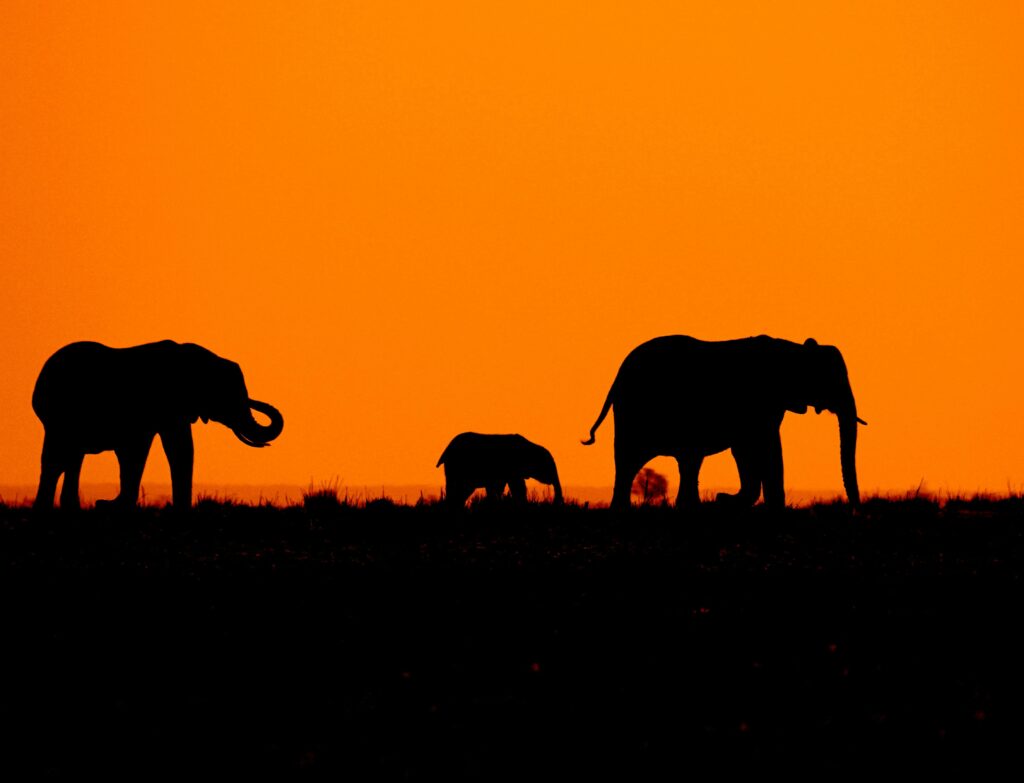
Tarangire is one of June’s quiet revelations: baobabs standing like old witnesses, elephants beginning to gather around the river, and a landscape that grows more compelling as water becomes more precious.
A June safari in Tanzania can also suit travelers drawn to remoteness. Ruaha and Nyerere speak to those who prefer a more spacious safari language: fewer vehicles, stronger wilderness feeling, and a sense of being far from the obvious route. These are not always first-safari choices, but for the right traveler they can feel exceptionally rewarding.
Tanzania in June is not yet at full intensity.
That is precisely why it can feel so refined.
6. It Suits Couples, Families, and Photographers Beautifully
The best safari month depends on the traveler.
For couples, June offers a quieter romance. Cool dawns, longer private drives, lantern-lit dinners, canvas rooms, and the pleasure of being slightly ahead of the busiest season. It is well suited to honeymooners who want East Africa to feel intimate rather than crowded.
For families, June can be strategically useful. Depending on school calendars and travel dates, it may fall before the deepest pressure of July and August. Camps that are excellent for families can still feel composed, especially when a private vehicle and guide are arranged from the beginning.
For photographers, a June safari offers subtle gifts: clearer air, fresh texture in the landscape, animals beginning to move more predictably, and light that has not yet become too harsh or dusty. The land still has color, but the safari experience is beginning to sharpen.
For return safari travelers, June can be even more appealing.
Those who have already seen the obvious icons often begin to value nuance: the difference between a reserve and a conservancy, the quality of guiding, the feel of a camp, the pace of a day, the ability to stay longer in one place rather than constantly move.
June rewards this kind of traveler: curious, patient, and less interested in being where everyone else has gathered.
7. It Encourages a Slower, More Considered Safari
A June safari should not be overbuilt.
The temptation, especially for first-time travelers to East Africa, is to add too much: one night here, two nights there, another flight, another transfer, another lodge. The itinerary looks impressive, but the experience can become thin.
June asks for more restraint.
Three nights in a place is often better than two. Four can be better still when the guiding is exceptional and the landscape has layers. A longer stay allows the guest to return to the same valley at a different hour, follow a pride across several days, understand the rhythm of a waterhole, or simply spend one afternoon doing very little.
That is not wasted time.
That is where safari begins to deepen.
The finest June safari itineraries are not crowded with movement. They are composed with intention. A beautifully shaped journey might combine Nairobi, Laikipia, and a Mara conservancy. Or Tarangire, Ngorongoro, and the Serengeti. Or a more secluded southern Tanzania route, ending with time beside the Indian Ocean.
Lamu, Zanzibar, or a quieter stretch of coast can soften the final days, allowing the journey to settle rather than simply end.
This is the Altivago view of luxury: fewer movements, deeper presence.
Not more places.
More meaning.
How Altivago Would Shape a June Safari
For Altivago, a June safari begins with pace.
Some travelers want long game drives and serious wildlife focus. Others want privacy, walking, design-led camps, cultural depth, or a slow coastal ending. Some want to photograph elephants in dry golden light. Others want to introduce children to East Africa with care and intelligence. Some want a honeymoon that feels intimate rather than performative.
The destination should follow the traveler, not the other way around.
Altivago would usually begin by considering the guest’s rhythm. How many times do they want to move? Do they prefer tented intimacy or lodge comfort? Do they want to be in famous landscapes or more private ones? Is the priority wildlife density, conservation, photography, family ease, or solitude?
From there, June becomes a beautiful month to design around.
It allows for classic East Africa, but also for something more subtle. A private conservancy instead of a busier reserve. A longer stay instead of another stop. A guide who can read the land rather than rush the day. A camp chosen not because it is the most visible online, but because it suits the guest’s temperament.
That is the difference between arranging a safari and crafting one.
The Altivago View
June is not the loudest safari month in East Africa.
It is better than that.
It is poised, intelligent, and quietly revealing. It carries the last softness of the green season and the first clarity of the dry. It offers space before peak demand, strong wildlife potential before the busiest weeks, and a more graceful rhythm for those who prefer to travel with intention.
For the right traveler, June is not a compromise before the main season.
It is the insider’s month.
The one chosen by those who understand that the finest safaris are not always the most crowded, the most obvious, or the most loudly advertised.
They are the ones that give you time.
Time to listen before the vehicle moves.
Time to watch the light change over the same plain.
Time to understand why the guide has stopped.
Time to let East Africa arrive slowly.
And in June, it does.
For travelers considering a June safari in East Africa, Altivago begins with the subtleties: the hour the light turns gold, the camps where privacy still holds, the guide who knows when not to move, and the pace at which a journey should unfold.