There is a moment before dawn when the safari is already being shaped, though the guest is still asleep.
The guide has checked the wind. The vehicle is ready. Coffee is being poured quietly beneath canvas. Somewhere beyond the lantern light, the land begins to stir — a francolin calling from the grass, the soft movement of camp staff preparing breakfast, the first pale line of morning gathering behind the acacias.
To the traveller, the day will feel effortless.
That is the point.
A truly considered private safari should never ask the guest to feel the machinery behind it: the partner vetting, guide selection, room placement, routing, privacy planning, aircraft connections, transfer margins, dietary notes, family rhythm, medical preferences, cultural sensitivity, and contingency thinking.
The guest should feel only the ease.
At Altivago, we work only with ethical and community-conscious safari partners because they solve several problems at once. They protect the land. They respect local people. They elevate the guiding. They reduce friction. They preserve privacy. They create a journey that feels less manufactured, less crowded, less uncertain — and more deeply held.
For private clients, this is not a soft value.
It is the difference between a safari that is merely expensive and one that is intelligently protected from the beginning.
Luxury Safari Planning Is Better Judgment, Not More Choice
Many safari companies can present beautiful lodges.
Fewer can tell you which lodge is right for your season, your privacy requirements, your family structure, your preferred pace, your tolerance for movement, your photographic interests, your dietary preferences, your security sensitivities, your arrival style, and your desire to travel with integrity.
This is where Altivago’s work begins.
We do not believe luxury safari planning is about offering the longest list of properties. It is about removing the wrong ones.
The lodge that photographs beautifully but feels crowded in peak season.
The camp with elegant interiors but inconsistent guiding.
The property with vague sustainability language.
The route that looks impressive on paper but creates fatigue in practice.
The famous name that does not protect privacy.
The cultural encounter that feels staged.
The destination pairing that adds movement but not meaning.
For discerning travellers, time is often the rarest luxury.
Our role is to protect it.
We simplify what is complex without flattening what is meaningful. We narrow the field. We separate reputation from suitability. We choose the partners who can hold the journey with grace, discretion, competence, and care.
For Private Clients: Discretion Is Designed, Not Added Later
For some guests, a safari must account for far more than destination and season.
It may need to align with private aviation schedules, personal assistants, family office coordination, security considerations, medical preferences, children across different ages, dietary protocols, press sensitivity, or the simple desire to move through Kenya or Tanzania without unnecessary visibility.
These details should not become the guest’s burden.
They are not complications to solve after confirmation. They are part of the design from the beginning.
Discretion is not simply a request for a private vehicle. It is a sequence of decisions: where you arrive, who receives you, how movements are timed, where your suite is placed, how dining is arranged, how much of the journey is shared with others, and how much explanation the guest is spared along the way.
The best private safari feels calm because the sensitive details have already been considered.
Altivago works quietly through these layers so the journey feels simple to the guest, even when the planning behind it is highly complex.
The 6 Altivago Principles for Choosing Ethical Safari Partners
Not every beautiful property meets the Altivago standard.
A celebrated lodge is not automatically an Altivago recommendation. A remote camp may still be wrong if the transfer rhythm is punishing. A conservation story may still be too vague. A property may be exquisite, but unsuitable for a guest who requires anonymity, quiet, or a particular family rhythm.
Our partner choices are shaped by six principles. These are not abstract values. They are safeguards that protect the quality of the guest experience.
1. Guiding Integrity
A safari is only as strong as its guiding.
The finest guide is not the loudest personality or the fastest driver. It is the person who reads the land with patience, understands animal behaviour, manages distance respectfully, interprets silence, and knows when not to move.
Altivago looks for guides who protect the guest from one of the most common safari disappointments: a rushed, crowded, or poorly interpreted wildlife experience.
A good guide does not chase the moment.
They know how to let it arrive.
For the guest, this means calmer sightings, better photography opportunities, richer interpretation, and a sense of being guided rather than transported.
2. Privacy Architecture
Privacy cannot be added at the end of an itinerary.
It must be designed from the start.
For high-profile travellers, founders, executives, public figures, families, and private individuals who value anonymity, the wrong lodge or routing can create avoidable exposure. A property may be beautiful but too social. A transfer may be efficient but too public. A room may be luxurious but poorly positioned. A guide may be experienced but not discreet.
Altivago considers privacy before confirming the journey.
We look at camp size, guest flow, vehicle arrangements, room location, dining flexibility, staff sensitivity, arrival style, transfer logistics, and the discretion of the partner.
The goal is not theatrical exclusivity.
The goal is ease — the quiet confidence that no one is improvising around your privacy once you arrive.
3. Community Benefit
Community-conscious travel should not be a paragraph in a brochure.
It should be visible in how people are employed, trained, hosted, represented, and respected.
Altivago favours partners with meaningful local relationships: camps that invest in nearby communities, guides who are rooted in the landscapes they interpret, cultural hosts who set the rhythm of the encounter, and conservation models where local people are not peripheral to the safari, but part of its future.
This matters deeply for the guest.
It prevents the discomfort of experiences that feel staged or extractive. It also creates a more grounded journey — one where hospitality has human depth, not only polish.
A safari should never make people feel like scenery.
4. Conservation Substance
Wildlife does not survive on beauty alone.
It needs land, corridors, protection, community participation, careful tourism management, and long-term economic logic. In Kenya and Tanzania, some of the most meaningful safari experiences are connected to conservancies, private wilderness areas, community lands, national parks, and lodges that actively support habitat protection.
Altivago looks for partners whose conservation contribution can be explained clearly.
That may include conservancy fees, habitat protection, anti-poaching support, wildlife monitoring, community-based conservation, responsible land use, or partnerships with trusted conservation organisations.
The exact model differs by destination.
The principle does not: tourism should help sustain the wilderness it celebrates.
5. Operational Excellence
Values are important. Execution is essential.
A partner may have admirable intentions, but a luxury safari still depends on flawless practical details: vehicles, maintenance, safety, food, service rhythm, dietary handling, family flexibility, medical awareness, transfer coordination, communication, and contingency planning.
Altivago pays close attention to the parts of the journey guests should never have to worry about.
Will the transfer timing feel humane?
Is the camp prepared for a delayed aircraft?
Can the kitchen handle specific preferences with discretion?
Is the vehicle comfortable for longer drives?
Does the team know how to host children without over-programming them?
Can the lodge coordinate smoothly with an assistant, family office, or private aviation schedule?
Is the property right for guests who need quiet, not constant social interaction?
This is where convenience becomes craft.
The best safari feels effortless because the friction has already been removed.
6. Cultural Respect
East Africa is not a backdrop for luxury travel.
It is a region of deep cultural presence — Maasai, Samburu, Swahili, Hadzabe, Datoga, Chagga, Meru, coastal, highland, pastoralist, urban, artistic, culinary, and contemporary.
Altivago avoids cultural encounters that feel staged for the camera or disconnected from context. We prefer experiences shaped by local hosts, with consent, dignity, and appropriate boundaries.
For the guest, this creates something far more valuable than performance.
It creates a meeting.
What Altivago Quietly Protects You From
A refined luxury safari is not only about what is included.
It is also about what is prevented.
Overcrowded sightings.
Weak guiding.
Too many lodge changes.
Beautiful camps in the wrong season.
Unnecessary flight connections.
Public transfers when privacy is needed.
Rooms that do not suit the guest’s purpose.
Dietary details handled without discretion.
Cultural visits that feel uncomfortable.
Green-season properties that lack atmosphere or access.
Peak-season itineraries that underestimate crowding.
Family safaris that ignore age differences.
Honeymoons that feel overly staged.
Conservation claims that are too vague to trust.
A journey where the guest has to repeat preferences from one place to the next.
The guest does not need to investigate every risk.
That is our work.
Our value lies in knowing where the friction tends to appear — and designing it out before the journey begins.
Why Ethical Safari Partners Matter in East Africa
Wildlife does not recognise borders.
Elephants move beyond parks. Lions follow prey across rangelands. Wildebeest, zebra, giraffe, wild dog, and countless bird species depend on connected landscapes, many of which sit beside or within community lands.
This is why ethical partner selection matters in East Africa.
In Kenya, private and community conservancies can protect important habitats beyond national parks while supporting local livelihoods. In Tanzania, community-based conservation and wildlife management areas form part of a wider effort to balance people, land, tourism, and wildlife.
These systems are complex. They require care, governance, trust, and long-term thinking.
But they remind us of something essential: conservation is strongest when local people are not treated as an afterthought.
A safari that ignores communities ignores the future of the wilderness.
A safari that respects communities becomes part of something more durable.
What This Means for Your Private Safari
For the traveller, all of this becomes tangible.
It means your guide is chosen for judgment, not just availability.
Your camp is selected for season, atmosphere, and suitability, not only reputation.
Your route is designed to protect energy, privacy, and flow.
Your cultural encounters are handled with dignity.
Your safari pace allows the land to reveal itself.
Your investment supports partners whose presence adds value to the places you visit.
For families, it means the experience can be shaped around different generations without losing elegance.
For honeymooners, it means privacy, beauty, and intimacy without cliché.
For high-profile travellers, it means discretion is not a special request. It is built into the design.
For repeat safari guests, it means deeper access, stronger guiding, and fewer generic recommendations.
For conservation-minded travellers, it means the journey feels aligned with personal values without becoming heavy-handed or performative.
This is the quiet convenience of working with the right people.
You do not have to carry the complexity.
Seasonal Relevance: When Partner Choice Matters Most
Ethical partner selection matters year-round, but certain seasons make discernment especially important.
July to October: Peak Safari Months in Kenya and Tanzania
During the dry season and migration period, demand rises in iconic regions such as the Maasai Mara and northern Serengeti. This is when poor partner selection can lead to crowded sightings, busy camps, and an itinerary that feels more public than private.
Altivago designs around this.
We may recommend private conservancies, carefully placed camps, superior guides, or a slower route that protects the quality of the experience.
Peak season can be magnificent.
It simply needs precision.
November to March: Green Season and Softer Wilderness
Green season rewards travellers who understand atmosphere: dramatic skies, young animals, migratory birds, softer light, and fewer vehicles in many areas.
But not every lodge is equally suited to this period. Some regions become harder to access. Some camps lose their sense of place in wet conditions. Some guides interpret the season beautifully; others treat it as secondary.
Altivago chooses partners who understand the subtleties.
For the right traveller, green season can feel deeply private and quietly cinematic.
December to January: Family and Festive Safari Travel
Festive travel requires more than availability.
Families need camps with flexible rhythm, thoughtful room configurations, child-sensitive guiding, strong safety standards, and enough privacy for different generations to move at their own pace.
The problem is rarely whether a camp accepts children.
The real question is whether it understands families well.
Altivago plans around that distinction.
Honeymoons, Anniversaries, and Private Celebrations
For romantic journeys, the wrong partner can turn intimacy into performance.
Altivago looks for properties that understand beauty without excess: private dining without theatre, attentive service without intrusion, room placement that protects quiet, and pacing that allows the couple to arrive fully into the journey.
Romance should feel natural.
Not arranged loudly.
What Altivago Recommends
For many first-time luxury travellers to Kenya, we often prefer pairing a private Mara conservancy with Laikipia rather than rushing through too many famous stops. This creates contrast: iconic wildlife, lower-density landscapes, conservation depth, and a more spacious rhythm.
For Tanzania, a slower northern circuit can be deeply rewarding when paced carefully. The Serengeti and Ngorongoro can be extraordinary, but they should not be treated as boxes to tick. Repeat safari travellers may find more privacy and elemental wilderness in Ruaha, Nyerere, or quieter Serengeti sectors.
For travellers who want culture and coast, the journey may continue toward Lamu, Zanzibar, or another carefully selected coastal retreat — not as an afterthought, but as a change of texture. After the intensity of the bush, salt air and Swahili rhythm can give the journey a graceful exhale.
The point is not to avoid iconic places.
The point is to enter them well.
Altivago’s role is to protect the guest from the wrong version of the right destination.
How Our Field Knowledge Shapes the Journey
The most important decisions in safari planning are often invisible.
A guest may notice the tented suite, the river view, the dining setting, the quiet welcome. Behind that is a set of judgments that determine whether the journey feels seamless or merely expensive.
Is this camp right for the month of travel?
Will the guiding match the guest’s level of interest?
Is the room placement suitable for privacy?
Are transfers efficient without feeling rushed?
Can the team handle dietary needs discreetly?
Will the lodge atmosphere suit a honeymoon, a family, or a guest travelling alone?
Can arrival and departure be handled without unnecessary visibility?
Does the conservation story have substance?
Does the route allow enough time for rest?
Is there a better choice that is less famous but more appropriate?
Altivago exists for these decisions.
Our clients do not need more information. They need sharper discernment.
The Guest Benefit: The Rare Feeling of Not Having to Manage Anything
The deepest luxury on safari is not always the most visible.
It is the feeling of not having to manage.
Not having to question whether the camp is right.
Not having to wonder whether the guide is strong.
Not having to solve logistics mid-journey.
Not having to explain privacy twice.
Not having to repeat preferences from property to property.
Not having to choose from an overwhelming list of options.
Not having to recover from a route that was too ambitious.
Not having to sense that something has been included merely because it sells well.
A well-planned safari gives the traveller back to the experience.
The morning light.
The quiet road.
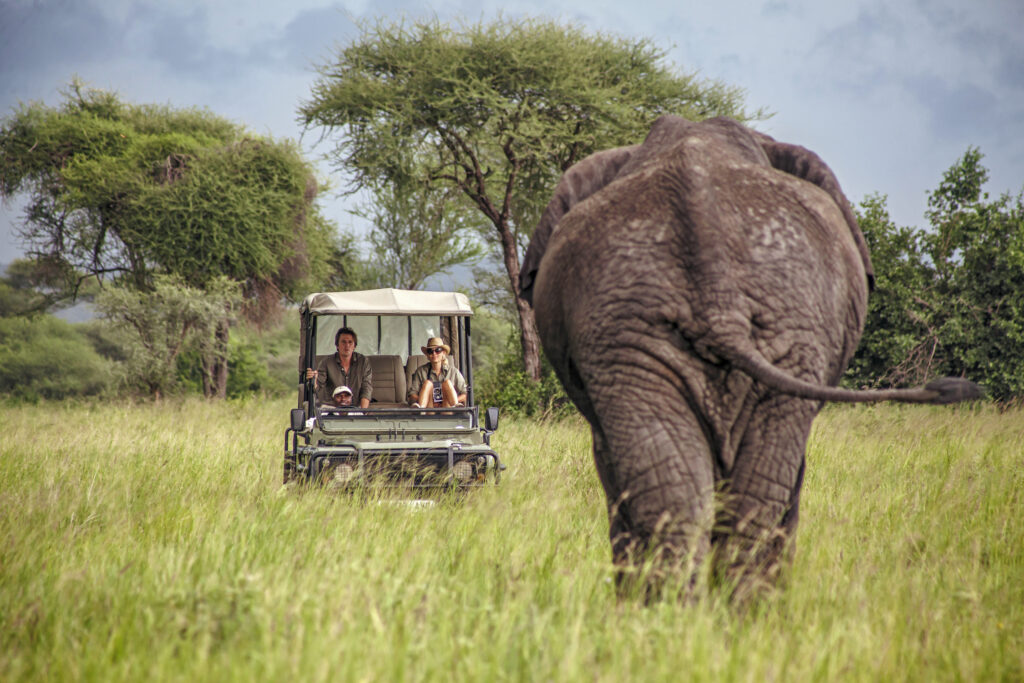
The elephant moving through dust.
The child asking a guide a question.
The first drink after a long afternoon drive.
The stars appearing one by one over camp.
Altivago handles the complexity so the guest can inhabit the journey.
That is the difference between an expensive safari and a deeply considered one.
The Altivago Standard
We are not interested in sending guests everywhere.
We are interested in sending them well.
That may mean recommending a quieter camp over a famous one. A private conservancy over a busier reserve. A longer stay over a more ambitious route. A lodge with subtler design but stronger guiding. A property whose values are not announced loudly, but felt in staff culture, conservation relationships, guest sensitivity, and the way the land is treated.
The question is never only, “Is this luxurious?”
The better question is:
Will this protect the guest’s time, privacy, comfort, values, and sense of wonder?
That is the Altivago standard.
A safari is not simply consumed. It is entered. It is received. It is entrusted to people who know the land in ways no brochure can fully hold.
Ethical and community-conscious partners are not an optional layer of the experience.
They are the foundation beneath its ease.
A Quiet Invitation
For travellers who value privacy, precision, and a safari shaped without unnecessary exposure or friction, Altivago begins with a private conversation — one designed to understand the pace, people, sensitivities, and standards behind the journey before anything is proposed.
FAQ
What makes a private safari in East Africa seamless?
A seamless private safari depends on more than beautiful lodges. It requires the right guiding, routing, privacy planning, camp selection, seasonal timing, transfer design, and partner coordination. The guest should not have to manage the complexity behind the journey.
How does Altivago choose safari lodges and camps?
Altivago looks beyond beauty and reputation. We consider guiding quality, privacy, camp atmosphere, conservation substance, community relationships, staff culture, routing logic, operational reliability, and whether the property truly fits the traveller’s season, pace, and personal requirements.
What makes a safari partner ethical?
An ethical safari partner respects wildlife, supports local people, treats staff well, operates transparently, protects habitat where possible, and hosts cultural encounters with dignity. For Altivago, ethics must be visible in daily operations, not only in marketing language.
Why does partner selection matter for private clients?
Because the wrong partner can create avoidable friction: loss of privacy, weak guiding, crowded sightings, poor routing, unsuitable rooms, unnecessary transfers, or experiences that feel generic. The right partner protects time, discretion, comfort, and the emotional quality of the journey.
Can Altivago coordinate through a personal assistant or family office?
Yes. Many private journeys involve assistants, family offices, security teams, or household staff. Altivago’s role is to keep the planning precise, discreet, and coherent so preferences, timing, privacy needs, and logistical details are handled without burdening the guest.
Are private conservancies better than national parks?
Not always, but they can offer important advantages when well managed. Private and community conservancies may support habitat protection, local benefit, lower vehicle density, flexible guiding, walking safaris, night drives, and a more private rhythm. National parks remain essential; the right choice depends on season, guest style, and itinerary design.
Does luxury safari tourism support conservation?
It can, when revenue supports habitat protection, local employment, conservation fees, community partnerships, and long-term land stewardship. Luxury alone does not guarantee positive impact. The partner model matters.
How does Altivago protect privacy on safari?
Privacy begins with itinerary design. Altivago considers camp size, room placement, private guiding, transfer style, dining flexibility, guest flow, staff discretion, arrival style, and destination timing to create a journey that feels quietly protected from the start.