The Art of Arriving Well: Designing a Private East African Safari
The first light over Nairobi arrives softly.
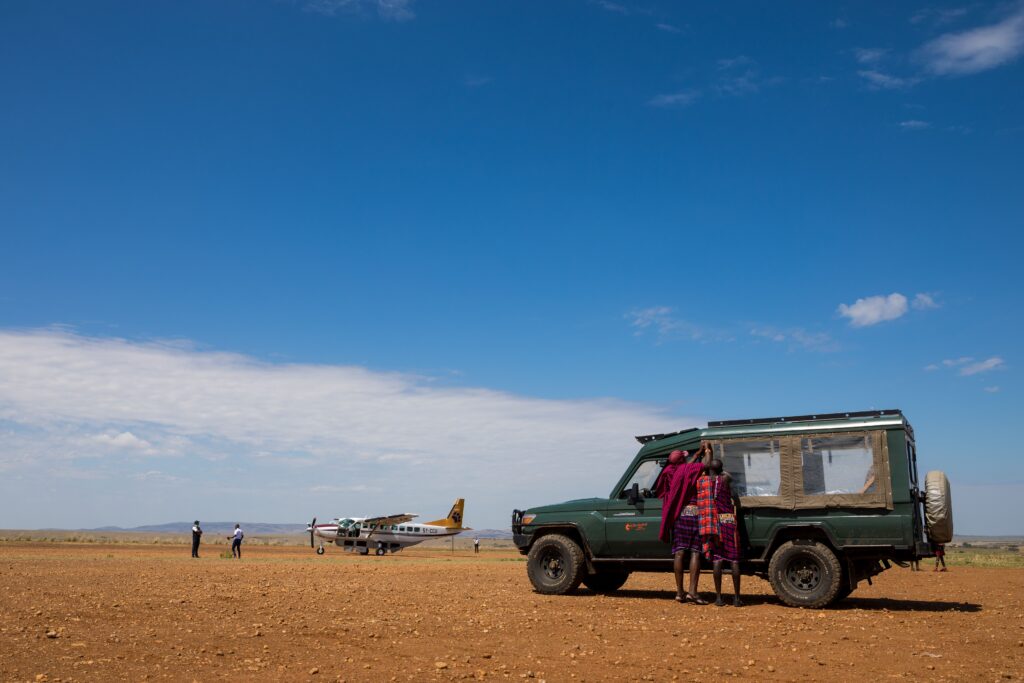
Outside, the city starts to wake up. Coffee is served. A canvas bag sits by the door. Across town, a small plane is getting ready for Laikipia, Amboseli, or the Maasai Mara.
In Arusha, the day might start under the distant shape of Mount Meru, with northern Tanzania stretching out beyond: Tarangire’s baobabs, the Ngorongoro Highlands, and the wide grasslands of the Serengeti.
These quiet transitional hours matter.
Even with great camps, skilled guides, and rare wildlife, a safari can feel rushed if arrival is just seen as a stopover. Too many flights, extra border crossings, short stays, and badly timed rest nights can disrupt the flow before you settle into the wild.
The distance to East Africa is measured in hours.
The quality of a private safari shows in how smoothly you adjust to those hours. Arriving Well Is Part of the Safari
For the best journeys, arrival is not just paperwork. It is the real beginning.
Your choice of airport, where you spend the first night, whether you take a scheduled bush flight or a private charter, how close the camp is to the airstrip, and how often you have to repack all shape your safari experience.
This is especially important for travellers crossing several time zones, families moving with children or grandparents, honeymooners arriving after a demanding season of celebration, and guests whose privacy, mobility, dietary or sensory requirements need to be understood before departure.
Here, luxury is not about adding more things.
It is about removing hassles.
Recent luxury travel research shows this change. Travelers now prefer trips in quieter seasons, smaller camps, longer stays, and experiences focused on privacy and ease instead of just collecting more. The 2026 Virtuoso Luxe Report notes a shift from rushing to ‘slow-mo’ travel, with safari guests picking smaller camps and relaxed wildlife viewing.
Begin With Time, Not a List of Places
The first question is not how many places you can fit into your trip.
It should be about how much time you want to feel truly present.
A shorter journey usually benefits from remaining within one country. A longer safari can hold a Kenya–Tanzania combination, but only when the transition contributes something meaningful rather than satisfying the idea that both countries should be included.
Each extra stop means more packing, transfers, flight schedules, getting used to a new camp, and another round of settling in.
Occasionally, that movement is worthwhile. A journey from Laikipia to a private Maasai Mara conservancy creates a compelling contrast between high rangeland and open grassland. Tarangire followed by an extended Serengeti stay allows Tanzania’s northern landscapes to unfold gradually. Ruaha and Zanzibar can move beautifully from inland wilderness to the Indian Ocean.
But every move should have a reason.
The goal is not to rush through East Africa.
It is to give the best parts of East Africa enough time.
How Long Should a Private Safari Be?
There is no single answer, but how far you travel should set the pace.
For travellers arriving from the United Kingdom or continental Europe, approximately nine to twelve nights can allow a meaningful safari without excessive movement. Nairobi currently has nonstop Kenya Airways connections from both Heathrow and Gatwick, making Kenya an especially natural first point of entry for some itineraries. Schedules should always be reconfirmed for the traveller’s actual dates.
For travellers arriving from Los Angeles or elsewhere on the US West Coast, twelve to sixteen nights often feels more proportionate to the long journey. The first night should rarely be overloaded. A quiet arrival, proper sleep and an unhurried onward departure protect the days that follow.
For travellers arriving from the UAE and wider Gulf, six to ten nights can feel substantial when routing is restrained. Current direct links connect Dubai with Nairobi and Dar es Salaam, while Doha provides access to Kilimanjaro and Dar es Salaam, creating several elegant entry points depending on the final safari region.
Travellers from the Gulf can reach East Africa fairly easily, but easy access should not mean rushing. An eight-night safari does not need four camps. Focusing on two well-chosen areas usually offers more.
Choosing the Right Gateway
Nairobi: Kenya’s Most Versatile Beginning
Nairobi is the natural gateway for most private journeys through Kenya.
From here, travellers can continue by light aircraft or private charter to the Maasai Mara, Laikipia, Amboseli, Samburu, Meru and selected coastal destinations. Wilson Airport handles many domestic safari departures, while Jomo Kenyatta International Airport receives international services.
Plan the transfer between the two airports carefully. Think about traffic, arrival checks, luggage, and your next flight’s departure time. Just because a same-day connection is possible does not mean it is the best choice.
For many travelers, spending the first night in Nairobi is not wasted time. It helps you recover from delays and tiredness, and lets you start your safari feeling refreshed.
Pick your hotel based on your plans for the next morning. A place close to Wilson Airport for an early flight may be better than a well-known hotel that requires crossing the city.
Kilimanjaro and Arusha: The Northern Tanzania Approach
Kilimanjaro International Airport is the principal gateway for Tanzania’s northern safari circuit.
It serves journeys into Arusha, Tarangire, Lake Manyara, the Ngorongoro Highlands and the Serengeti. Depending on arrival time, travellers may stay near Arusha or continue by carefully coordinated road or air transfer.
The first night should be calm and restful on purpose. The evening is for an elaborate programme. It is a chance to sleep, reset and prepare for the altitude, early departures and open landscapes ahead.
A northern Tanzania itinerary is often strongest when it moves in one direction. Tarangire can lead naturally into the Ngorongoro Highlands before the journey opens into the Serengeti. Where time is limited, flying one sector can prevent the route from becoming an exercise in road endurance.
Dar es Salaam: The Door to Southern Tanzania
Dar es Salaam is the practical gateway for Tanzania’s southern landscapes, particularly Nyerere and Ruaha.
These regions suit travellers who value scale, low visitor density and a more remote sense of wilderness. They also require confidence in logistics. Flight days, aircraft routings, seasonal camp operations and onward coastal connections should be examined as a complete system.
Southern Tanzania is not simply the northern circuit with fewer vehicles.
It has a different rhythm: broad river systems, miombo woodland, long distances and camps that can feel profoundly removed from the outside world.
Zanzibar: A Beginning or a Softer Ending
Zanzibar is often treated as an automatic post-safari addition.
It should be considered more carefully than that.
For some travellers, the coast offers a graceful final chapter: slower mornings, private villas, Swahili architectural detail, warm Indian Ocean air and time to absorb what has been experienced inland.
For others, a beach stay can dilute a safari they would rather deepen.
The right decision depends on the season, the quality and privacy of the coastal property, the traveller’s relationship with heat and humidity, and whether the journey needs contrast or continuity.
Zanzibar can also function as an international gateway for selected Tanzania itineraries, but flight sequence and onward connections must be assessed against the specific travel dates.
Kenya or Tanzania: Choose by Rhythm
The difference between Kenya and Tanzania is about more than just which animals you might see.
Both countries have amazing landscapes, great guides, and exciting seasonal wildlife. The better question is how you like to travel.
Choose Kenya for Contrast, Conservancies and Private Houses
Kenya lets you move smoothly between very different places. A journey might begin among the high rangelands and conservation landscapes of Laikipia, continue to the open plains of a private Maasai Mara conservancy and end beside the Indian Ocean in Lamu.
Amboseli offers elephant country and long views toward Kilimanjaro. Samburu brings dry-country species, riverine life and a distinct northern atmosphere. Laikipia rewards travellers interested in conservation, private land, walking, riding and a more participatory relationship with place.
Around the Maasai Mara, the distinction between the National Reserve, the Mara Triangle and private or community conservancies is particularly important. The experience changes according to vehicle density, guiding rules, camp location and the traveller’s tolerance for concentrated activity during migration season.
Altivago usually recommends giving yourself enough time to enjoy both the Reserve and the quieter pace of a good conservancy. The goal is not to avoid the Mara’s famous wildlife, but to make sure your whole safari is not ruled by it.
Kenya is also particularly strong for multigenerational journeys where an exclusive-use house, private vehicle, flexible meal times and varied activity levels can make a material difference.
Choose Tanzania for Scale and Continuity
Tanzania often feels bigger and more open.
In the north, Tarangire, Ngorongoro and the Serengeti can form a geographically coherent journey. The landscapes change, but the safari retains a sense of continuation.
The Serengeti is worth more than a quick visit. Its beauty is in its size, shifting light, animal behaviour, and the chance to follow the seasons without focusing on just one big event.rn regions offer an entirely different Tanzania. Ruaha, Nyerere, Katavi and Mahale suit travellers prepared to travel farther for remoteness, depth and a less conventional itinerary.
Tanzania is especially appealing if you want to stay in one big ecosystem for several nights, letting the weather and wildlife guide your days instead of following a strict schedule.
Three Ways to Shape the Journey
These are not set packages. They are examples of different travel paces.
A Ten-Night Kenyan Journey
Nairobi — Laikipia — Private Maasai Mara Conservancy
Begin with a quiet night in Nairobi.
Continue to Laikipia for four nights, choosing the conservancy according to guiding quality, wildlife interests, activity level and preferred camp atmosphere. This might include rhino conservation, walking, riding, time with researchers or simply long private drives across high open country.
Finish with five nights in a private Mara conservancy, using the time for flexible guiding and selective access to the Reserve or Mara Triangle where season and wildlife movement make it worthwhile.
This trip is good for travelers who want variety without feeling scattered.
A Fourteen-Night Tanzanian Journey
Arusha — Tarangire — Serengeti — Zanzibar
Spend the first night near Arusha.
Continue to Tarangire for three nights, allowing enough time to move beyond a single game drive and understand its river, woodland and baobab country.
Fly or travel onward into the Serengeti for five nights. The precise region should follow seasonal wildlife movement, but the camp must also be chosen for atmosphere, guiding quality and the experience available beyond the most public sightings.
End with five nights on Zanzibar in a property selected for privacy, sea conditions, architectural character and the needs of the individual traveller.
This trip is great for a honeymoon or a relaxing private getaway, where the coast offers a real change of pace.
An Eight-Night Private Safari
Nairobi — Amboseli or Laikipia — Private Maasai Mara Conservancy
For travellers arriving from the Gulf, East Africa can hold a concise but meaningful safari.
Spend the arrival night in Nairobi, followed by three nights in either Amboseli or Laikipia and four nights in a private Mara conservancy.
The choice between Amboseli and Laikipia depends on the traveller. Amboseli may suit guests drawn to elephants, open views and a shorter classic safari structure. Laikipia offers greater activity variety and may be preferable for families, returning safari travellers or guests interested in conservation-led experiences.
The plan is kept simple on purpose.
Two main landscapes. One steady pace.
Private Aviation: When It Adds Meaning
Private flights should solve a real need.
It may be valuable when a family wishes to travel together without split schedules, when privacy is important, when an aircraft can land closer to the chosen camp, or when a direct routing removes a night and several hours of unnecessary transit.
It can also support photographers carrying specialist equipment, travellers with restricted mobility and guests whose international arrival requires greater control over departure time.
But private flights are not always the best option.
Some charter aircraft are limited by airstrip length, weather, operating permissions and daylight. A private flight may still require road transfers. It may not remove luggage restrictions unless the aircraft has been selected accordingly.
The real question is not just if a private plane is available.
It is whether it truly saves time, adds comfort, or gives you more privacy.
Camp Position Matters More Than Camp Fame
A famous camp in the wrong spot can take away from an otherwise well-planned trip.
Location determines the length of transfers, access to wildlife areas, the quality of morning and evening light, exposure to other vehicles and the ease of moving between activities.
During the migration period, camp position should be considered alongside the uncertainty of herd movement. No ethical planner can guarantee a river crossing or place wildlife on a timetable.
A stronger approach is to select a region with good seasonal relevance, stay long enough for changing conditions and ensure the guide has the freedom to make intelligent decisions in the field.
For private travellers, camp size also matters.
A smaller camp might be quieter, but small does not always mean private. Where your room is, how the staff works, dining setup, vehicle use, family rules, and how guests move all affect privacy.
The most expensive camp is not necessarily the most appropriate one.
The best camp is the one that fits how you want to experience the landscape.
Seasonality Is About More Than Wildlife
January to March
The southern Serengeti and Ndutu region can be especially compelling during this period, with herds using the short-grass plains and many animals giving birth.
This can be a great time for seeing animal behavior, predators, and taking photos, but where the wildlife is depends on the rains, not a set calendar.
In Kenya, the early months can suit travellers drawn to drier conditions in some regions, clear mornings and a quieter rhythm outside major holiday periods.
June
June often carries a sense of transition.
Landscapes start to dry out, visibility gets better, and the biggest crowds have not arrived yet. June is a good month for travelers who want clear conditions without the busy rush of July and August.
July to October
These are among the most requested months for the Maasai Mara and northern Serengeti.
The season can bring significant wildlife movement and concentrated predator activity, but it also brings stronger demand and the possibility of crowded high-interest sightings.
Privacy at this time depends on where your camp is, which conservancy you choose, having a private guide, how long you stay, and being willing to leave crowded spots for quieter moments.
September can be particularly attractive for travellers who are not governed by school-holiday calendars. Current UK travel research also identifies growing interest in September departures and longer-haul travel.
The Green Season
The green season is not a second-rate safari.
It is simply a different experience.
Rain brings dramatic skies, softer light, migrating birds, new growth, and fewer vehicles in many places. Some camps close, some roads get harder, and wildlife spreads out, so you need to choose your camp and region carefully.
For some travelers, this time feels open and full of atmosphere.
It also aligns naturally with the wider movement toward shoulder-season travel and crowd avoidance identified in current luxury-travel research.
Privacy Is More Than a Private Vehicle
A private vehicle matters because it gives control over departure times, duration, interests and pace.
But real privacy goes beyond that.
It also means where your room is, how many guests are in camp, if you can dine quietly, how cultural visits are set up, whether your needs are known before you arrive, and how discreetly staff handle your requests.
For Gulf travellers, private accommodation, personalisation and meaningful experiences are especially relevant. Mastercard’s research on affluent MENA travellers highlights strong demand for secluded accommodation, customised experiences and travel that offers cultural connection rather than consumption alone.
For families, privacy may mean an exclusive-use house and enough flexibility for different generations to experience the day differently.
For honeymooners, it may mean a camp where service feels perceptive without becoming present at every moment.
For neurodivergent travellers or guests with sensory sensitivities, it can mean predictable transfers, clear communication, a quieter room position and the ability to adjust the day without explanation.
For a traveller with reduced mobility, it begins with honest information: distances, steps, vehicle access, bathroom configuration, aircraft boarding and the terrain between room and main area.
True hospitality is not just for show.
It is thoughtful and ready.
The Role of the Guide
The guide is not just a guide; a guide does more than just find animals. guide understands when to wait, when to move, when to explain and when silence is more valuable.
They read behaviour. They watch animal behaviour instead of chasing sightings as trophies. They understand good light for photos, family needs, conservation, and the mood in the vehicle. Cultural encounters.
A meaningful visit: A meaningful visit should not feel staged. It should be set up with respect, consent, and a clear sense of who benefits. The best experiences come from real relationships—like conservation work, local businesses, land care, research, or honest conversations with the host community. The safari depth.
The itinerary gives the guide enough time to do so.
The Most Considered: The best-planned journeys are often the simplest. It takes confidence to leave something out. It may mean an afternoon without packing.
One fewer flight may mean a longer lunch beneath an acacia.
One additional night may allow the traveller to return to a landscape after rain, follow a pride over several days or recognise the same elephant herd moving through the valley.
This is the essence. This is what a slow safari is all about. Attention.
It is about paying attention. It is full of movement, wildlife, conversation, and discovery. It just avoids the stress of rushing to the next place.
A private East African safari should start with the people who are going on it.
Their energy, their family, their reasons for traveling, and how they feel about time, privacy, and distance.
Only then should the route take shape.
Kenya may offer the right contrast between conservation land. Only after that should the route be planned. Tanzania may offer the scale and continuity of a long Serengeti immersion. A combination may be right when time allows it to breathe.
The essential decision is not how much of East Africa can be fitted into the journey.
The key decision is not how much of East Africa you can squeeze into your trip. The key decision is how to weave through Kenya and Tanzania around season, access, guiding quality and personal rhythm. Begin a private conversation, and the route can be considered from the first international arrival to the final quiet morning in camp.
Speak to our Safari Specialists
FAQs
How many nights are ideal for a private East African safari?
Approximately nine to fourteen nights suit many travellers. Those arriving from farther time zones may benefit from twelve to sixteen nights, while a well-edited single-country safari can work within eight to ten nights.
Should I choose Kenya or Tanzania for a first safari?
Choose according to travel rhythm rather than a wildlife checklist. Kenya is particularly strong for private conservancies, varied landscapes and exclusive-use houses. Tanzania offers scale, geographic continuity and extended Serengeti immersion.
Is it worth spending the first night in Nairobi or Arusha?
Often, yes. A recovery night protects the safari from international delays, fatigue and rushed domestic connections. It can make the entire journey feel more composed.
Is private aviation necessary for a high-end safari?
Not always. It is most valuable when it saves meaningful time, improves privacy, keeps a group together or creates a more direct route. Well-timed scheduled bush flights can also work elegantly.
Can Kenya and Tanzania be combined in one safari?
Yes, but the journey generally benefits from at least twelve to fourteen nights. With less time, choosing one country and exploring it more deeply will often create the stronger experience.
What makes a safari genuinely private?
A private vehicle is only one element. Camp size, room position, guiding, dining flexibility, transfer design, guest flow and pre-arrival understanding all contribute to a sense of privacy.