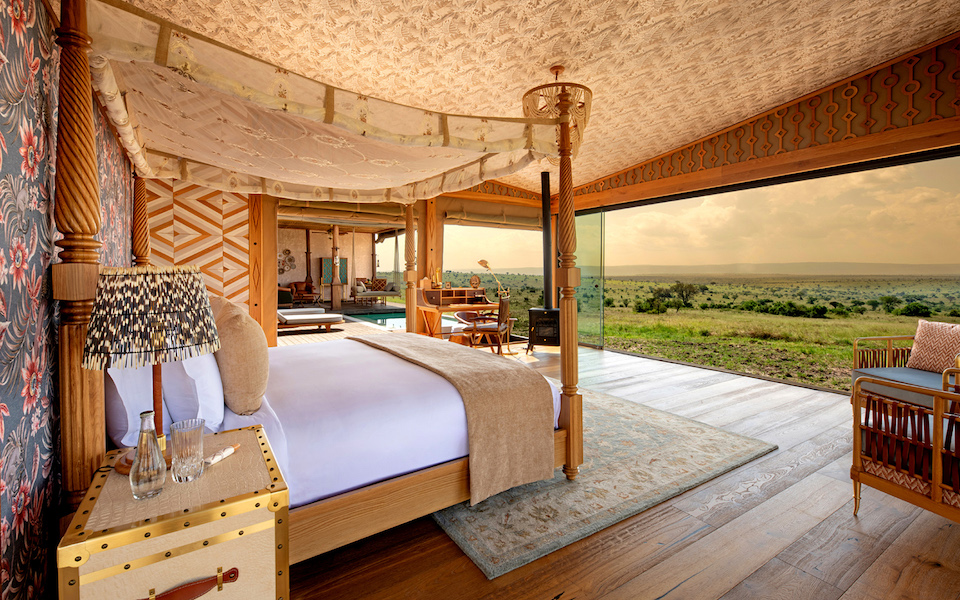
At dawn, before the engine turns and before the first cup of coffee has cooled in your hands, the bush is almost entirely made of sound.
A dove calls from the acacia shade. Somewhere beyond the grass, a lion exhales into the blue-grey morning. The air is cool enough for a shawl. The earth still holds the memory of night.
Nothing has happened yet.
And that is precisely the point.
For many years, safari was often imagined as a grand movement across a map: three nights here, two nights there, another flight, another camp, another landscape collected before breakfast. It promised abundance, and often delivered it. But the most discerning travellers are beginning to ask a quieter question.
What if the deepest luxury in East Africa is not seeing more?
What if it is staying long enough to truly notice?
This is the essence of slow safari. It is not a trend dressed in linen. It is a return to the original rhythm of the wilderness: patient, sensory, private, and profoundly alive.
For Altivago, slow safari is the foundation of how a journey should be shaped across Kenya and Tanzania. Fewer destinations. More considered time. Private guiding where possible. Conservation-conscious camps. Cultural encounters that are not staged for speed. Days that leave space for silence, weather, animal behaviour, conversation, and surprise.
Because East Africa does not reveal itself on command. It opens slowly.
What Is Slow Safari?
Slow safari is the art of travelling through the wilderness with restraint.
It favours three or four nights in one exceptional camp over a single rushed night in several places. It chooses depth over distance. It allows a traveller to understand not only where the lions were seen yesterday, but why they may move toward the river today. It gives a guide time to read the land, and a guest time to become part of its rhythm.
In a private conservancy in the Maasai Mara, slow safari may mean beginning the morning not by chasing a sighting, but by following tracks in the dust and learning how the night unfolded.
In Laikipia, it may mean pausing under fever trees while elephants move silently through the shade.
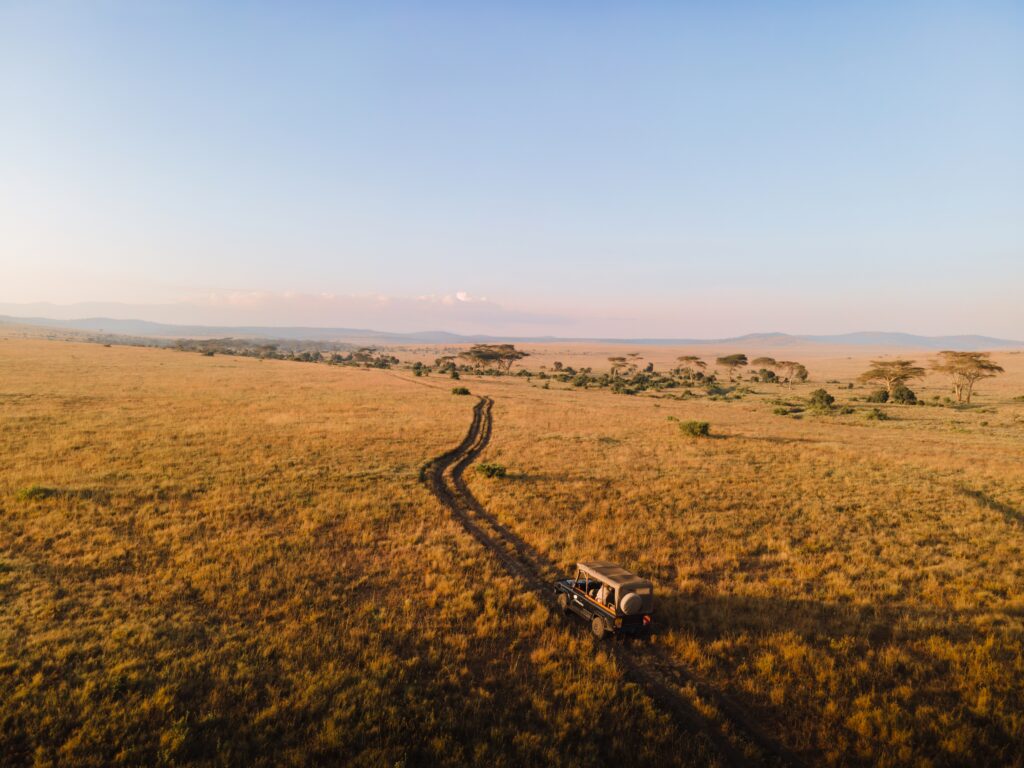
In the Serengeti, it may mean staying long enough to feel the difference between the golden restlessness of morning and the amber stillness before dusk.
In Ruaha or Nyerere, it may mean accepting that remoteness is not an inconvenience, but the very source of the journey’s power.
Slow safari is not passive. It is attentive.
Why Modern Luxury Travellers Are Choosing Depth
The most sophisticated travellers are increasingly moving away from travel that feels crowded, overdesigned, or performative. Privacy, emotional restoration, conservation value, wellness, and specialist knowledge now matter as much as thread count and wine lists.
East Africa is uniquely suited to this shift.
Kenya and Tanzania offer landscapes where time behaves differently. The Maasai Mara’s private conservancies reward patient observation. Laikipia invites walking, camel-supported wilderness, horseback safaris, and conservation-led encounters. Amboseli gives space to watch elephants beneath Kilimanjaro’s changing light. The Serengeti, Ngorongoro, Tarangire, Ruaha, Nyerere, and Zanzibar each offer a distinct tempo, and each becomes more meaningful when not hurried.
A fast safari can show you wildlife.
A slow safari can show you relationship: between predator and prey, rain and grass, guide and land, community and conservation, guest and silence.
That difference is everything.
Fewer Places, Better Chosen
A well-designed East African safari does not need to prove itself through constant movement.
For a first journey to Kenya, one might combine Nairobi, a private Maasai Mara conservancy, and perhaps Laikipia or Lamu. For Tanzania, a deeply considered itinerary may move from Tarangire to the Serengeti and onward to Zanzibar, or from Ruaha to Nyerere for a wilder, more secluded southern circuit.
The point is not minimalism for its own sake. The point is coherence.
Too many flights and transfers can fracture the emotional arc of a safari. Just as a great piece of music needs pauses, a great journey needs stillness. A longer stay in one camp allows you to know the guide, understand the terrain, recognise individual animals, and settle into the almost ceremonial rhythm of safari life: wake before sunrise, return for lunch in the heat, read in the shade, go out again when the light softens.
This is where luxury becomes personal.
A lodge begins to feel less like accommodation and more like a temporary home in the wild. The staff learn how you take your coffee. Your guide understands whether you prefer photography, birdlife, big cats, walking, quiet observation, or simply the pleasure of being out before anyone else. The landscape gains intimacy.
You stop passing through.
The Role of Private Conservancies
Nowhere is the slow safari philosophy more powerful than in East Africa’s private conservancies.
In Kenya, the conservancies bordering the Maasai Mara offer a different kind of safari experience from the main reserve: lower vehicle density, sensitive guiding practices, night drives in certain areas, walking where permitted, and a conservation model that can support both wildlife habitat and local landowners.
For the right traveller, this can be transformative.
The experience feels less like arriving at a spectacle and more like entering a living ecosystem. Vehicles are fewer. The pace can be gentler. The sense of access is more refined. One does not need to rush from sighting to sighting because the day has room to unfold.
This matters especially during the migration months, when demand for the Maasai Mara and northern Serengeti is high.
A slow safari does not ignore the migration. It reframes it.
Rather than treating the migration as a single dramatic event to be consumed, it places the herds within a larger ecological story: weather, movement, tension, patience, and the ancient intelligence of animals responding to land.
The Beauty of Waiting
One of the first lessons of safari is that wilderness cannot be scheduled with human precision.
A leopard may remain hidden for hours and then emerge in a shaft of evening light. Elephants may take an entire afternoon to cross a plain. Wild dogs may appear just as you have stopped looking for them. A lioness may lift her head for one second and change the whole mood of a morning.
In ordinary life, waiting can feel like a delay.
On safari, waiting is often the doorway.
This is why private guiding is such an essential part of high-end safari design. A superb guide does more than find wildlife. They interpret silence. They understand tracks, wind, birdsong, alarm calls, and the emotional temperature of a guest. They know when to move and when to remain still.
The finest safari moments often belong to those who do not hurry away.
Conservation as a Luxury Standard
A modern luxury safari cannot be separated from conservation.
The most meaningful journeys through Kenya and Tanzania are those that understand wildlife not as scenery, but as part of a fragile and complex future. Choosing the right camps, conservancies, guides, and routes matters. So does understanding how tourism supports habitat protection, community partnership, anti-poaching work, and long-term stewardship.
This does not mean a guest’s experience should feel worthy or austere. Quite the opposite. Conservation-led luxury is often more elegant because it is more deeply rooted in place. The materials feel considered. The footprint is lighter. The guiding is stronger. The relationship between camp and landscape is more honest.
A slow safari gives travellers time to understand this connection.
Not through lectures, but through lived experience: speaking with a guide whose knowledge was shaped by the land; visiting a community project with respect and context; learning why conservancies matter; seeing how space, restraint, and responsible access protect the very wilderness one has come to encounter.
Slow Safari for Families, Couples, and Private Groups
Slow safari is not one kind of journey. It is a way of designing many.
For families, it creates flexibility. Children do not always need long game drives or constant movement. They need wonder, safety, space, and guides who know how to translate the bush into curiosity. A slower itinerary allows for shorter drives, pool time, tracking lessons, storytelling, and intergenerational ease.
For honeymooners, slow safari creates intimacy. The journey becomes less about a sequence of beautiful lodges and more about privacy, candlelit dinners, soft mornings, and the rare feeling of being alone together in a vast landscape.
For private groups, it allows the safari to become social without feeling crowded: a private vehicle, a villa-style camp, a dedicated guide, and days shaped around the group’s own rhythm.
For photographers, it offers the greatest gift of all: time with light. Not only sightings, but the right angle, the right patience, the right return to a place where something may happen again.
Where Slow Safari Belongs in East Africa
In Kenya, slow safari finds natural expression in the private conservancies of the Maasai Mara, the wild elegance of Laikipia, the elephant country of Amboseli, the dry northern beauty of Samburu, and the coastal stillness of Lamu.
In Tanzania, it lives in the great plains of the Serengeti, the ancient drama of Ngorongoro, the baobab landscapes of Tarangire, the remote power of Ruaha, the riverine wilderness of Nyerere, and the Indian Ocean softness of Zanzibar.
Each place has its own pace.
The Mara is theatrical, but its conservancies can be intimate. Laikipia is cerebral, conservation-minded, and quietly adventurous. Amboseli is elemental. The Serengeti is vast enough to humble any itinerary. Ruaha feels raw and deeply private. Zanzibar, when chosen with care, becomes not an add-on but an exhale.
The skill lies in knowing how to combine them without breaking the spell.
How Long Should a Slow Safari Be?
For a truly considered East African safari, seven nights is often the beginning. Ten to fourteen nights allows the journey to breathe.
A refined Kenya itinerary might include Nairobi for arrival and recovery, followed by three or four nights in a private Maasai Mara conservancy, then three or four nights in Laikipia or Amboseli.
A graceful Tanzania journey might include Tarangire or Ngorongoro, followed by four nights in the Serengeti, then a quiet finish on Zanzibar or a more remote extension into Ruaha.
For guests with more time, Kenya and Tanzania can be combined beautifully, but only when the journey is designed with restraint. Border crossings, flight paths, seasonal wildlife movement, and camp atmosphere all matter. The best itineraries feel seamless not because they include everything, but because they remove what is unnecessary.
A Different Definition of Luxury
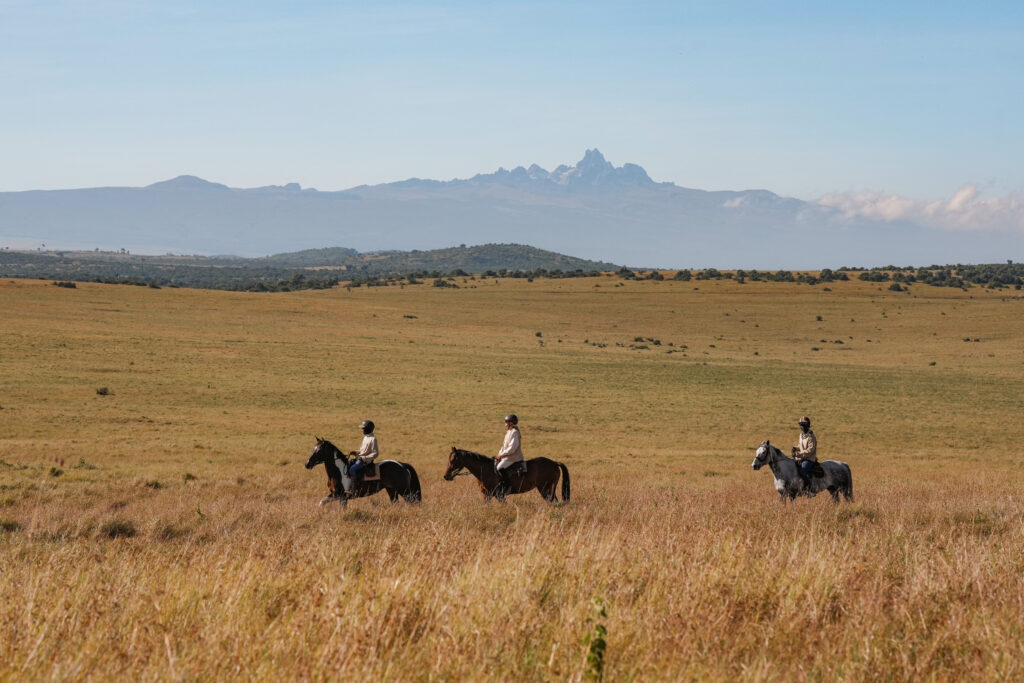
At Altivago, we believe the new language of luxury safari is quieter.
It is not excess. It is access.
Not speed. Time.
Not performance. Presence.
It is the privilege of waking slowly in canvas and linen while the grasslands turn gold. It is a guide who knows when not to speak. It is a camp whose beauty comes from belonging to the land rather than dominating it. It is the private hour when an elephant herd moves past your deck and no one reaches for a schedule.
East Africa has always held this kind of luxury.
The world is only now remembering how to value it.
A slow safari is not about doing less. It is about feeling more of where you are. It is the difference between looking at Africa and allowing Africa to change the tempo of your attention.
And perhaps that is the rarest journey of all.
For travellers considering Kenya or Tanzania in the coming months, Altivago shapes private safari journeys around season, pace, guiding style, camp atmosphere, and personal rhythm. The most meaningful itinerary begins not with a list of places, but with a conversation about how you want the journey to feel.